I just found out that I was voted the Other Fantasy Board's Pimp of the Year for a second year in a row on www.wotmania.com! My reviews, interviews and book giveaways likely clinched it for me. And yet, there's a lot of competition over there, so going for the threepeat is not a given!
You know what they say: Pimpin' ain't easy!;-)
Many thanks to everyone on the OF board who voted for me!:-) And no, sadly, voting for me didn't increase your odds of winning the next few contests!!!
Guy Gavriel Kay Interview
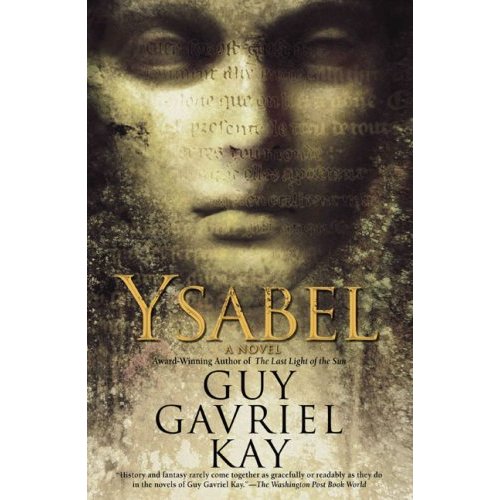
This Q&A was originally slated to appear later this month, but Guy told me that copies of Ysabel have been seen in Canadian stores already. And since this interview is meant to promote his newest release, what would be the point of waiting, right?
Many thanks are owed to Guy for accepting to answer these questions, even though his schedule was quite full. It was quite a treat for me to interview one of my favorite fantasy authors of all time!;-) As for Ysabel, you guys can expect a book review at some point next week.
Enjoy!
-----------------------
- It seems that you derive as much inspiration from the extensive research associated with the creation of each new work as from the actual writing process. Do you believe that the old adage "the journey is more important than the destination" applies to you when the time comes to write a new tale?
I think there must BE a journey, for the writer at least as much as for the reader. The sense of a writer discovering what a given book is, or wants to be is - I have always believed - a major element of what the reader, in turn, finds compelling. Craft and art and patience play their roles, but research is a part of craft, for me. It is also, honestly, the fun part ...when I'm researching a book I am relaxed and even excited ... all I'm doing is learning stuff, no responsibilities! The danger for me is of yielding to 'grad student syndrome' ... the temptation to read just ONE more book or article, email ONE more person with a query ... instead of starting the writing.
- You have been writing novels for over two decades. What has changed the most in the fantasy genre since you began your career?
This one is a slam-dunk: undoubtedly the emerging dominance of the YA fantasy, post Rowling, post Pullman, post Snickett, and the more general emergence in a huge way of YA as a literary phenomenon. When I grew up there were children's books (which were often read to you, including something like The Hobbit, or Narnia) and then by 12 you were, if a reader, reading ANY book. It has been said the Victorians invented childhood in the 'modern' sense. I think the Baby Boomers invented the categorization and simplification of pre-teen and even teen literature. I hear this from librarians all the time, and they aren't all that happy about it. Fantasy is NOT responsible for this, but it has certainly surfed that YA wave.
- What advice would you give a younger Guy Gavriel Kay concerning his writing career? Looking back, would you have done anything differently?
It is hard to address this, actually, as the market has changed so much from when I started. And a lot turns on what the younger writer wants to achieve. Given how you've phrased the question, I'd caution against a too-narrow focus on trends and tastes within any genre ... if the writer's ambitious in a real way, he or she needs to shoot at a harder target. If the interest is purely commercial, finding a niche, rather than the sort of thing I did with TIGANA (and then even more with ARBONNE) in shifting away from a high fantasy start is not a 'smart' move ... but it felt essential from a creative perspective not to start cloning myself early.
- In light of the current market, are you tempted to write one of those enormous fantasy epics which continue to be the most successful series at the moment?
No.
- How would you like to be remembered as an author? What is the legacy you'll leave behind?
Legacy-assessment is really for others and, by definition, needs time and perspective. We know with certainty that some major titles of this year or last will be out of print in five years, and some books that are minor right now will get shelf life, perhaps because the writer achieves something major in a few years and pulls up their backlist. My hope is that I've made a contribution to the expanding of the horizons of fantasy, the perception of what it is capable of doing, the blurring of boundaries defining genre and mainstream art. I dream of the books staying around, lasting, being in bookstores (or maybe eBooks!) and enjoyed when my grandchildren's children learn to read.
- Honestly, do you believe that the speculative fiction genre will ever come to be recognized as veritable literature? Truth be told, in my opinion there has never been this many good books/series as we have right now, and yet there is still very little respect (not to say none) associated with the genre.
This is partly answered in the previous question, as to hopes or ambitions. I actually think the genre gets more credibility than ever these days, and that has a lot to do with demographics ... a generation coming of age for whom the fantastic (or sf) are simply core elements of their culture, whether in books, films, television.
But it is important to separate the appraisal of an 8 or 9 volume fantasy series from the assessment of a new book by Ian McEwan or Richard Ford. (Or even a Cormac McCarthy that can easily be named a sf novel.) When you write and publish to rubrics, formulas, heavily associated with a genre you WILL create a barrier for those who have not yet grown easy with those rules or templates. It is difficult for the L.A. Times or the Toronto Globe and Mail to review volume six of a series unless that series has already made a colossal impact on the culture (Harry Potter, Lemony Snickett - which takes us back to the YA dominance). One form of 'respect' for the fantastic is simply the increasing acceptance (in English - it has existed elsewhere for some time) of 'using' such elements by writers regarded as mainstream. I'm optimistic, actually.
- Now that many purists and aficionados consider you one of the best fantasy authors in the world, is there added pressure when it comes down to writing a new novel?
That's a kind thing to say, by way of preface. Thank you. The pressure's largely internal, and has been, really, from TIGANA on. I'm not prolific, but there seem to be ten novels now, and that implies an increasing burden of trying to maintain standards. It gets even heavier when you make yourself (as I have) something of a 'moving target' ... trying to NOT repeat, to shift terrain, moods, themes.
If you think about it, just because an author wants to try something new, why should one of his readers automatically want to try it? You run a risk, whenever you do this. The late, very fine Canadian novelist, Brian Moore, was once asked in a television interview, why he hadn't been even more of a bestseller. He thought about it for a moment on camera, then answered, 'I think perhaps because I don't do the same book each time out.' As consumers of art we are a conservative bunch ... we want the writer, musician, painter, filmmaker to 'do to us again' what they did to us before. So this, for me, becomes another layer of pressure when I realize that a given book -such as YSABEL now - insists on being a departure.
- Given the choice, would you take a New York Times bestseller, or a World Fantasy Award? Why, exactly?
It sounds too glib to say 'both' and unfair since you made it a choice ... so I'll opt for the NY Times, in part because it would reflect a measure of success in achieving those blurred borders and boundaries between genre and mainstream that I've mentioned above.
Core fantasy, of the multi-volume saga sort, DOES hit that list, but that's not what I'm writing, so success there would carry implications for what I've been striving towards. Having said that, let me offer a nod towards the WFA ... David Hartwell, John Douglas, and their colleagues ... have attempted from the beginning to do their own 'stretching' of what fantasy is, in the nominations and winners, and I genuinely applaud it.
- The fact that you have an official website on the internet is an indication that interaction with your readers is important to you as an author. How special is it to have the chance to interact directly with your fans?
I'm deeply touched by it, derive way too much pleasure from - say - the 'denizens' at www.brightweavings.com, and I'm also sometimes worried about author-fan interaction.
We've moved more than ever towards a 'branding' culture, the writer's personality and style can start to matter as much (more?) than the quality of their work, or - maybe a better way to put it - can affect or filter HOW the work is responded to. The online world, the blogosphere, has radically shifted the landscape and we're still sorting out what that means. Writers can be 'out there' on their own site or commenting on each other's blogs on a daily or many-times-daily basis. Even if you don't go that far, the very fact that I'm 'here', Pat, on your site, represents a shift over the last number of years. I'm trying - I think we all are, though with widely different personalities - to negotiate this transition, and find a comfort zone that balances privacy, focus on work, and the pleasures and benefits of interaction.
Win a free copy of Dan Simmons' THE TERROR
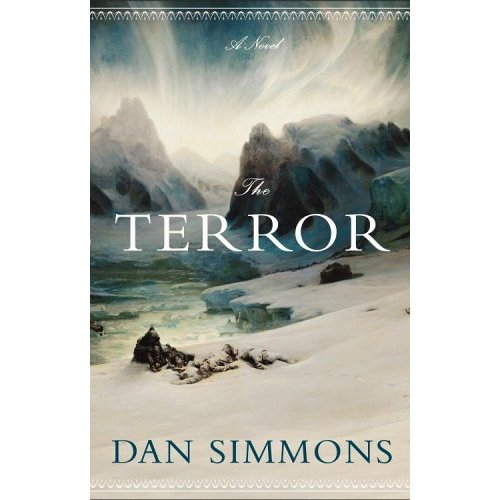
Here we go! Our first contest of 2007!:-)
Thanks to Little Brown and Company, I have five copies of Dan Simmons' The Terror up for grabs. I'm still waiting for word from Transworld, but I'm persuaded I'll have a few copies of the UK edition as well.
The rules are the same as usual. First off, you need to send an email at reviews@(no-spam)gryphonwood.net with the header "TERROR." Remember to remove the "no spam" thingy.
Second, your email must contain your full mailing address (that's snail mail!), otherwise your message will be deleted.
Lastly, multiple entries will disqualify whoever sends them. And please include your screen name and the message boards that you frequent using it, if you do hang out on a particular MB.
Good luck to all the participants!
Accepting Questions for a China Miéville Interview

I will be doing a Q&A with Miéville next month to promote his newest release, Un Lun Dun. As always, feel free to submit your questions, either here or on the various message boards where this announcement will be made. The most interesting questions will be selected to comprise the interview.
I will also check with Del Rey Books to see if I could get them to support a China Miéville contest!;-)
Complete Index (2005 and 2006)
In the last year or so, I've been receiving a lot of emails asking me to come up with an unabridged index for this blog, with links to past reviews and interviews. It took this long to create that index, because producing such a thing is time-consuming. Time I don't necessarily have to spare. . .
Still, I wanted to begin the year with something special, so here it is!:-) It took a while to put together, but it's done! I think I covered most of everything, with easy links to take you there in a heartbeat!;-)
Enjoy!
Patrick
--------------------------
2005
JANUARY
- The Book of Words (J. V. Jones)
- Children of Amarid (David B. Coe)
- The Outlanders (David B. Coe)
- Eagle-Sage (David B. Coe)
FEBRUARY
- Shadowmarch (Tad Williams)
- Ship of Magic (Robin Hobb)
- Mad Ship (Robin Hobb)
- Ship of Destiny (Robin Hobb)
MARCH
- The Runes of the Earth (Stephen R. Donaldson)
- David B. Coe interview
- Tad Williams interview
- The Silences of Home (Caitlin Sweet)
- Quicksilver (Neal Stephenson)
APRIL
- L. E. Modesitt, jr. interview
- Star Wars: Revenge of the Sith (Matthew Stover)
- The Confusion (Neal Stephenson)
- The System of the World (Neal Stephenson)
MAY
- The Darkness that Comes Before (R. Scott Bakker)
- The Warrior-Prophet (R. Scott Bakker)
- Fool's Errand (Robin Hobb)
- Golden Fool (Robin Hobb)
- The Contiki Experience
JUNE
- Fool's Fate (Robin Hobb)
- It's Only Temporary (Eric Shapiro)
- In the King's Service (Katherine Kurtz)
- The Curse of Chalion (Lois McMaster Bujold)
- Paladin of Souls (Lois McMaster Bujold)
JULY
- Robin Hobb interview
- The Years of Rice and Salt (Kim Stanley Robinson)
- Neverwhere (Neil Gaiman)
AUGUST
- The Golden Compass (Philip Pullman)
- The Subtle Knife (Philip Pullman)
- The Amber Spyglass (Philip Pullman)
- Dune: The Butlerian Jihad (Brian Herbert and Kevin J. Anderson)
SEPTEMBER
- Dune: The Machine Crusade (Brian Herbert and Kevin J. Anderson)
- Dune: The Battle of Corrin (Brian Herbert and Kevin J. Anderson)
- Shaman's Crossing (Robin Hobb)
OCTOBER
- One Palestine, Complete (Tom Segev)
- Anansi Boys (Neil Gaiman)
- Knife of Dreams (Robert Jordan)
- Legacies (L. E. Modesitt, jr.)
- Bloodline of the Holy Grail (Laurence Gardner)
NOVEMBER
- Darknesses (L. E. Modesitt, jr.)
- Scepters (L. E. Modesitt, jr.)
- Thud! (Terry Pratchett)
- Kitty and the Midnight Hour (Carrie Vaughn)
DECEMBER
- The Thousandfold Thought (R. Scott Bakker)
- The Radioactive Redhead (John Zakour and Lawrence Ganem)
- Giants of the Frost (Kim Wilkins)
- Elantris (Brandon Sanderson)
- R. Scott Bakker interview
- Lord of Snow and Shadows (Sarah Ash)
2006
JANUARY
- Steven Erikson interview
- Prisoner of the Ironsea Tower (Sarah Ash)
- Children of the Serpent Gate (Sarah Ash)
- The Amber Wizard (David Forbes)
FEBRUARY
- Steven Erikson interview
- Gardens of the Moon (Steven Erikson)
- Naomi Novik interview
- The Rule of Four (Ian Caldwell and Dustin Thomason)
- Brandon Sanderson interview
- Talon of the Silver Hawk (Raymond E. Feist)
- David Eddings interview
- Deadhouse Gates (Steven Erikson)
- King of Foxes (Raymond E. Feist)
MARCH
- Paul Kearney interview
- His Majesty's Dragon / Temeraire (Naomi Novik)
- Memories of Ice (Steven Erikson)
- In the Eye of Heaven (David Keck)
- David Keck interview
APRIL
- Exile's Return (Raymond E. Feist)
- House of Chains (Steven Erikson)
- Throne of Jade (Naomi Novik)
- Caitlin Sweet interview
MAY
- George R. R. Martin interview
- Ian Cameron Esslemont interview
- City of Saints and Madmen (Jeff Vandermeer)
- Tracy and Laura Hickman interview
- Jacqueline Carey interview
- Midnight Tides (Steven Erikson)
- Black Powder War (Naomi Novik)
- The Lies of Locke Lamora (Scott Lynch)
- Robin Hobb interview
JUNE
- Ian Cameron Esslemont interview
- Vellum (Hal Duncan)
- Scott Lynch interview
- Zodiac (Neal Stephenson)
- Kitty goes to Washington (Carrie Vaughn)
JULY
- Carrie Vaughn interview
- Twilight Falling (Paul S. Kemp)
- The Bonehunters (Steven Erikson)
- Dawn of Night (Paul S. Kemp)
- Forest Mage (Robin Hobb)
AUGUST
- Midnight's Mask (Paul S. Kemp)
- Mistborn: The Final Empire (Brandon Sanderson)
- The Mark of Ran (Paul Kearney)
- This Forsaken Earth (Paul Kearney)
- Night of Knives (Ian Cameron Esslemont)
- Lonely Planet Bluelist
SEPTEMBER
- Flight of the Nighthawks (Raymond E. Feist)
- A Game of Thrones (George R. R. Martin)
- Melanie Rawn interview
- Into a Dark Realm (Raymond E. Feist)
- Joel Shepherd interview
- Good Omens (Terry Pratchett and Neil Gaiman)
OCTOBER
- Fragile Things (Neil Gaiman)
- Crossover (Joel Shepherd)
- River of Gods (Ian McDonald)
NOVEMBER
- Spellbinder (Melanie Rawn)
- Ian McDonald interview
- A Clash of Kings (George R. R. Martin)
- The Blade Itself (Joe Abercrombie)
DECEMBER
- Winterbirth (Brian Ruckley)
- Joe Abercrombie interview
- The Crooked Letter (Sean Williams)
- Orson Scott Card interview
- Brian Ruckley interview
- Peter Watts interview
- Blindsight (Peter Watts)
Still, I wanted to begin the year with something special, so here it is!:-) It took a while to put together, but it's done! I think I covered most of everything, with easy links to take you there in a heartbeat!;-)
Enjoy!
Patrick
--------------------------
2005
JANUARY
- The Book of Words (J. V. Jones)
- Children of Amarid (David B. Coe)
- The Outlanders (David B. Coe)
- Eagle-Sage (David B. Coe)
FEBRUARY
- Shadowmarch (Tad Williams)
- Ship of Magic (Robin Hobb)
- Mad Ship (Robin Hobb)
- Ship of Destiny (Robin Hobb)
MARCH
- The Runes of the Earth (Stephen R. Donaldson)
- David B. Coe interview
- Tad Williams interview
- The Silences of Home (Caitlin Sweet)
- Quicksilver (Neal Stephenson)
APRIL
- L. E. Modesitt, jr. interview
- Star Wars: Revenge of the Sith (Matthew Stover)
- The Confusion (Neal Stephenson)
- The System of the World (Neal Stephenson)
MAY
- The Darkness that Comes Before (R. Scott Bakker)
- The Warrior-Prophet (R. Scott Bakker)
- Fool's Errand (Robin Hobb)
- Golden Fool (Robin Hobb)
- The Contiki Experience
JUNE
- Fool's Fate (Robin Hobb)
- It's Only Temporary (Eric Shapiro)
- In the King's Service (Katherine Kurtz)
- The Curse of Chalion (Lois McMaster Bujold)
- Paladin of Souls (Lois McMaster Bujold)
JULY
- Robin Hobb interview
- The Years of Rice and Salt (Kim Stanley Robinson)
- Neverwhere (Neil Gaiman)
AUGUST
- The Golden Compass (Philip Pullman)
- The Subtle Knife (Philip Pullman)
- The Amber Spyglass (Philip Pullman)
- Dune: The Butlerian Jihad (Brian Herbert and Kevin J. Anderson)
SEPTEMBER
- Dune: The Machine Crusade (Brian Herbert and Kevin J. Anderson)
- Dune: The Battle of Corrin (Brian Herbert and Kevin J. Anderson)
- Shaman's Crossing (Robin Hobb)
OCTOBER
- One Palestine, Complete (Tom Segev)
- Anansi Boys (Neil Gaiman)
- Knife of Dreams (Robert Jordan)
- Legacies (L. E. Modesitt, jr.)
- Bloodline of the Holy Grail (Laurence Gardner)
NOVEMBER
- Darknesses (L. E. Modesitt, jr.)
- Scepters (L. E. Modesitt, jr.)
- Thud! (Terry Pratchett)
- Kitty and the Midnight Hour (Carrie Vaughn)
DECEMBER
- The Thousandfold Thought (R. Scott Bakker)
- The Radioactive Redhead (John Zakour and Lawrence Ganem)
- Giants of the Frost (Kim Wilkins)
- Elantris (Brandon Sanderson)
- R. Scott Bakker interview
- Lord of Snow and Shadows (Sarah Ash)
2006
JANUARY
- Steven Erikson interview
- Prisoner of the Ironsea Tower (Sarah Ash)
- Children of the Serpent Gate (Sarah Ash)
- The Amber Wizard (David Forbes)
FEBRUARY
- Steven Erikson interview
- Gardens of the Moon (Steven Erikson)
- Naomi Novik interview
- The Rule of Four (Ian Caldwell and Dustin Thomason)
- Brandon Sanderson interview
- Talon of the Silver Hawk (Raymond E. Feist)
- David Eddings interview
- Deadhouse Gates (Steven Erikson)
- King of Foxes (Raymond E. Feist)
MARCH
- Paul Kearney interview
- His Majesty's Dragon / Temeraire (Naomi Novik)
- Memories of Ice (Steven Erikson)
- In the Eye of Heaven (David Keck)
- David Keck interview
APRIL
- Exile's Return (Raymond E. Feist)
- House of Chains (Steven Erikson)
- Throne of Jade (Naomi Novik)
- Caitlin Sweet interview
MAY
- George R. R. Martin interview
- Ian Cameron Esslemont interview
- City of Saints and Madmen (Jeff Vandermeer)
- Tracy and Laura Hickman interview
- Jacqueline Carey interview
- Midnight Tides (Steven Erikson)
- Black Powder War (Naomi Novik)
- The Lies of Locke Lamora (Scott Lynch)
- Robin Hobb interview
JUNE
- Ian Cameron Esslemont interview
- Vellum (Hal Duncan)
- Scott Lynch interview
- Zodiac (Neal Stephenson)
- Kitty goes to Washington (Carrie Vaughn)
JULY
- Carrie Vaughn interview
- Twilight Falling (Paul S. Kemp)
- The Bonehunters (Steven Erikson)
- Dawn of Night (Paul S. Kemp)
- Forest Mage (Robin Hobb)
AUGUST
- Midnight's Mask (Paul S. Kemp)
- Mistborn: The Final Empire (Brandon Sanderson)
- The Mark of Ran (Paul Kearney)
- This Forsaken Earth (Paul Kearney)
- Night of Knives (Ian Cameron Esslemont)
- Lonely Planet Bluelist
SEPTEMBER
- Flight of the Nighthawks (Raymond E. Feist)
- A Game of Thrones (George R. R. Martin)
- Melanie Rawn interview
- Into a Dark Realm (Raymond E. Feist)
- Joel Shepherd interview
- Good Omens (Terry Pratchett and Neil Gaiman)
OCTOBER
- Fragile Things (Neil Gaiman)
- Crossover (Joel Shepherd)
- River of Gods (Ian McDonald)
NOVEMBER
- Spellbinder (Melanie Rawn)
- Ian McDonald interview
- A Clash of Kings (George R. R. Martin)
- The Blade Itself (Joe Abercrombie)
DECEMBER
- Winterbirth (Brian Ruckley)
- Joe Abercrombie interview
- The Crooked Letter (Sean Williams)
- Orson Scott Card interview
- Brian Ruckley interview
- Peter Watts interview
- Blindsight (Peter Watts)
Guy Gavriel Kay contest winner
Hi there!
To celebrate the new year, the name of our winner has been drawn. This lucky lady will receive Guy Gavriel Kay's entire backlist! Many thanks to both Penguin Books and Harper Collins for their kind support.
The winners is:
Danielle Tucker, from Churchill Falls, Newfoundland, Canada (Snuffaluffalee on asoiaf.westeros.org)
Thanks to all the participants! Stay tuned for more, as I should be announcing new contests soon!:-)
To celebrate the new year, the name of our winner has been drawn. This lucky lady will receive Guy Gavriel Kay's entire backlist! Many thanks to both Penguin Books and Harper Collins for their kind support.
The winners is:
Danielle Tucker, from Churchill Falls, Newfoundland, Canada (Snuffaluffalee on asoiaf.westeros.org)
Thanks to all the participants! Stay tuned for more, as I should be announcing new contests soon!:-)
Five books I really, really wanted to read in 2006

But alas, life got in the way. Hopefully I'll finally get to them in 2007.
- Cryptonomicon by Neal Stephenson
- Jonathan Strange and Mr. Norrell by Susanna Clarke
- American Gods by Neil Gaiman
- House of Leaves by Mark Z. Danielewski
- Infoquake by David Louis Edelman
As you can see, the first four have been on my "books to read" pile for a few years now. What can I say!?! Too many books, and too little time!;-)
Happy New Year to everyone!:-)
New Brandon Sanderson Interview
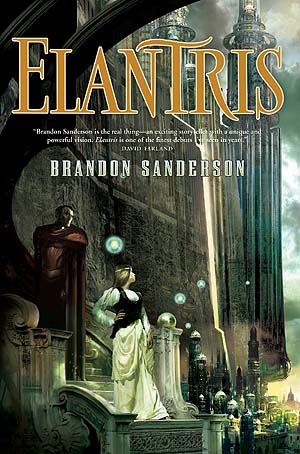
Once again, I acted as the middleman to help elbakin.net get another interview, this time with Brandon Sanderson. The French translation has been up for a while now, but I was just notified that the English version has been posted.
You can find the Q&A here.
Enjoy!
This week's New York Times Bestsellers (December 26th)

Nothing to report in hardcover. . .
In paperback:
Eric S. Nylund's Ghosts of Onyx is up three positions, finishing its sixth week on the bestseller list at number 21. For more info about this book: Canada, USA, Europe.
Robert Jordan's Knife of Dreams is down five spots, ending its third week on the NYT list at number 23. For more info about this book: Canada, USA, Europe.
Troy Denning's Star Wars: Legacy of the Force: Tempest is down 10 positions, finishing its second week on the prestigious list at number 31. For more info about this book: Canada, USA, Europe.
2006 Year-End Awards
Hi guys!
Hope you all had a wonderful Christmas! I was finally able to put together my list of awards, so the wait is over! There's a bit of humor, of course. And as always, many of you won't agree with my selections. That's quite all right with me, as long as we agree to disagree!:-)
Happy Holidays!
Patrick
---------------------
Although the Fantasy Hotlist Awards has a nice ring to it, I'm afraid I'm looking for something with a little more cachet. In the film industry, one can win an Oscar. In the music business, you can take home a Grammy. To celebrate American Theatre excellence, one can win a Tony. So in speculative fiction, why couldn't we have a Terry?
Imagine the prestigious trophy. Can you picture that little golden statuette of man with his arms crossed against his chest, his entire demeanor radiating unflagging steadfastness? Can you see it in your mind's eye, sporting a pony tail and a beard, a hard-faced mien meant to project unyielding toughness, yet not quite capable of concealing the underlying ridiculousness of his expression? Yes, a Terry is just what we need! A plaque bearing the inscription "Fantasy is for hacks" would be the perfect finishing touch, making a Terry the second-most sought-after accolade after the World Fantasy Award. What say you, the fans!?! Could we be onto something here!?!;-)
TOP 10 NOVELS OF 2006
1- The Thousandfold Thought (R. Scott Bakker)
2- The Bonehunters (Steven Erikson)
3- Vellum (Hal Duncan)
4- River of Gods (Ian McDonald)
5- The Lies of Locke Lamora (Scott Lynch)
6- Temeraire/His Majesty's Dragon (Naomi Novik)
7- Crossover (Joel Shepherd)
8- Winterbirth (Brian Ruckley)
9- The Crooked Letter (Sean Williams)
10- Blindsight (Peter Watts)
Okay, so some of these books were released earlier in the UK or elsewhere. And yet, those titles are part of the list because I read the North American version which came out this year. But I see you coming. You'll counter by telling me that some novels in the top 10 are not yet available on this side of the Atlantic Ocean. Well, I live in Canada, which means that I, supposedly, have the best of both worlds (my country being part of the Commonwealth and all that crap!). And it's my own damn list, so I can do what I want!;-)
There are three Pyr titles in that list. Hopefully most of you will be smart enough to understand what that means. . .
BEST SFF MESSAGE BOARD
- http://asoiaf.westeros.org
I enjoy every online community I frequent, but Ran's board is where it's at! Mainly because everyone from everywhere seems to converge there!
BEST BOOK I'VE READ THIS YEAR
- Memories of Ice by Steven Erikson
Honorable mention: Deadhouse Gates by Steven Erikson
I'm a recent Malazan convert, as you well know. What can I say!?! It's been that kind of year!
FAITH OF THE FALLEN AWARD: WORST BOOK I'VE READ THIS YEAR
- Talon of the Silver Hawk by Raymond E. Feist
Honorable mentions: King of Foxes and Into a Dark Realm, both by Raymond E. Feist
Yikes! Tough year for Feist, one of my favorite fantasy authors.
COMEBACK OF THE YEAR AWARD
- Melanie Rawn, author of Spellbinder
Honorable mention: Raymond E. Feist, author of Flight of the Nighthawks
Welcome back, Melanie! And Feist proved that he could still write some ripping yarns!
THE BEASTIE BOYS "I'LL KICK YOU OUT OF MY HOME IF YOU DON'T CUT THAT HAIR" AWARD
- We have a tie between R. Scott Bakker and Scott Lynch!
Honorable mentions: Hal Duncan and Terry Goodkind, for his patented Yeard!
MOST OVERRATED NOVEL
- City of Saints and Madmen by Jeff Vandermeer
I know I'm going to take some heat for this one, but this book simply didn't live up to my expectations. It's not bad -- far from it. The hype surrounding this one was probably too strong. And I guess the squid lore didn't quite do it for me. . .
MOST UNDERRATED NOVEL
- Mistborn: The Final Empire by Brandon Sanderson
Honorable mentions: Forest Mage by Robin Hobb, The Mark of Ran and This Forsaken Earth by Paul Kearney
FAVORITE RELATED BLOG
- www.speculativereviews.blogspot.com
I read and enjoy many blogs on a daily/weekly basis. I think my list of links attest to that fact (though I don't update it nearly often enough, I know!). But this year, William Lexner gets the nod.
I mean, come on! Stego's been accused of single-handedly killing Emerald City (seriously, it will be missed)and nearly destroying the Hugo Awards! And here I am, doing interviews with authors such as George R. R. Martin, Orson Scott Card and Guy Gavriel Kay, receiving Erikson's Reaper's Gale manuscript months in advance, as well as other such nonsense. Hmmm, it must be nice to have that kind of notoriety.
Keep up the good work, William!
ROOKIE OF THE YEAR AWARD: BEST DEBUT
- Hal Duncan, author of Vellum
Honorable mentions: Scott Lynch, author of The Lies of Locke Lamora; Naomi Novik, author of Temeraire/His Majesty's Dragon; Brian Ruckley, author of Winterbirth; Joel Shepherd, author of Crossover
I can't recall another year in which there was so many impressive debuts. Still, for writing such an ambitious and mesmerizing book, Duncan takes the cake!
Now Hal, I'm aware that this isn't exactly the WFA. But it's still something. . . Right!?! Let me make it up to you by sweetening the deal a bit. First drink on me, should we ever meet in person. How about that!?!
THE LOIS McMASTER BUJOLD "THIS ONE WILL WIN AN AWARD OR THREE" AWARD
- Lois McMaster Bujold, author of Beguilement
Who else, really? Every time this woman writes something, it ends up winning an award. Poor Kay, Ysabel has no chance to capture the WFA. . .
On a more serious note, Peter Watts' Blindsight appears to be a sure nominee for the next Hugo Awards.
THE MICHAEL RICHARDS AWARD: RANT OF THE YEAR
Unlike many blogs and websites out there, I don't have resident hecklers and haters. Be that as it may, I nevertheless receive occasional emails and PMs ripping me and my posts. Hence, I've decided to give you a little sample of what sometimes comes my way.
Some of you have already read or heard of the "Lemmings of Discord" rant I received last summer. For your reading pleasure, hereby you will find the best parts of that message. It's from Ron Wilson, aka MyStar, close friend of Terry Goodkind and webmaster or admin of the author's official website. At the time I was trying to get an interview with Goodkind, hoping the give him an opportunity to address many of the controversial issues that surround him. During that same period, the Goodkind parody threads on westeros really took off, and like many I made it a point to read them every day. Well, MyStar saw a glib remark from me on one of those threads, and that was the end of it. For the record, I must admit that our correspondence prior to that moment was very civil. After that, however, well let's just say that I never got a Christmas card from him. Oh, and he doesn't hold the people at westeros in his heart. . .
Here's a taste of what he had to say (the spelling and grammatical errors are his, not mine):
And as for "detractors" the 5 people at your westros board don't really count as "detractors", more along the lines of hecklers and gits. But I've got better things to do with my time than spend reading or interacting with people who are incapable of any kind of coherent thought. Attacking Goodkind for what they admire in GRRM or Bakker etc... sorry pot calling the kettle black simply doesn't warrant time from me. [...]
I've read many of your reviews for some time now. While I will admit you have wrangled a few interviews, they came not from
anything "you" did but rather you asking (most persistently I might add, so says the people offering these reviews) to do them and trying to sell yourself to the task. Mediocre at best. I've seen worse interviews, but I've seem much better as well. You seem to get hung up on "your view of things, from your perspective only", and not allowing that opposing views have any merit. [...]
Yet, you not only lower your self by your close association with these trolls, but the quality of your work. You forget to remove yourself from a neutral standpoint and rather encourage the shtick. Bad form! I can only imagine that publishers getting excerpts of your behavior and lack of professional demeanor are going to be frowning at your so called ability to be fair and respectful. [...]
These poor pathetic people have no clue as to anything Goodkind is writing about. Faith of the Fallen in any poll out there is always 9 out of 10 top favorite of the series. That you and these lemmings of discord find it reprehensive is telling indeed. Telling everyone that you indeed have missed the whole point of the book as well as the series. No wonder you cannot tell good literature from mindless drivel. These people of Westros et al. read a paragraph, them proceed to eliminate anything they do not want to be there, and instead focus on only what they wish to see. [...] Sorry these people you hang out with have no idea about any thing other than their mindless attempts at twisting the series into something unrecognizable and vile for their own sick entertainment. [...]
You seem to be under the impression that because you read a wide Varity of "Fantasy" that you are the rule,when nothing is further from the truth. The "small" number of vulgar voices at westros et al, is but a scattering of sand in a vast sea of readers. Having just gotten back from the book signing and Meet the Author" I arrange for Terry, I have come away with some new insights. Goodkind readership is vast and world wide. These people are not only willing to travel from all parts of the world to get a book signed but to meet the man himself and tell him face to face what truly phenomenal work he has done. I've been to many many book signings by Goodkind and never once have we ever heard anything but praise and adoration of Goodkind and his work. This weekend has shown that you and your band of troll are not only wrong, but far far in the minority. Something I honestly think you are aware of but refuse to admit. [...]
Pat, the thing about all of this is honesty and respect. You show neither. You may well not care for Goodkind, fine. I've no problem with that. But you not only do yourself a disservice, but you fail all of your readers when you refuse to see that there are more positive aspects to Goodkind and his works that you are willing to let on. You do yourself a disservice when you try to dismiss the facts that are so clearly evident and rather try to diminish them by refusing to admit that Goodkind and his series has merit. Trust me when I say, you will never achieve your goals until you embrace that which you refuse to admit...the truth. I do think you have potential, as long as you can keep your focus and stop letting your friends direct your thoughts. [...]
There you have it: The truth will set us free. So forget about Bakker, Duncan, Erikson, Miéville, Gaiman, Kay, and the rest. Go read the SoT and get real!;-) As to all you trolls on westeros, see how you've ruined my reputation! Bastards, every last one of you!;-)
At least he recognized the fact that I read a wide varity of fantasy novels!
THE BEST THING SINCE SLICED BREAD AWARD
- Pyr
A breath of fresh air in both the fantasy and science fiction genres.
UNEXPECTED SURPRISE AWARD
- Kitty Goes to Washington by Carrie Vaughn
Okay, so she's won this award two years in a row. I guess I didn't think that Vaughn could do it again. . . But she certainly did!
INTERVIEW OF THE YEAR
- We have a tie between R. Scott Bakker (December 2005) and Steven Erikson (January 2006)
Honorable mention: Peter Watts (December 2006)
I've been very fortunate to get all those interviews in 2006. To me, it's a real privilege to have the opportunity to ask questions to some of the most popular novelists out there. Hence, each Q&A was an enjoyable experience for me. Hopefully the authors feel the same way!:-)
So why Bakker and Erikson? Simply because these two were the first to really take the ball and roll with it. Political correctness was left behind, and that made for two very refreshing interviews. I may be wrong, but I'm persuaded that these two interviews truly helped generate interest in this blog. Which, in turn, subsequently allowed me to secure interviews with notable authors such as George R. R. Martin, David Eddings, Jacqueline Carey, and all the rest.
MOST PROMISING NEW VOICE AWARD
- Scott Lynch
Hands down, this award can go to no one else! The Lies of Locke Lamora showed that this guy has it all and could possibly go all the way. Unless it was a fluke (which I doubt), Red Seas Under Red Skies should establish Lynch as one of the elite of the fantasy genre.
MOST ACCESSIBLE AUTHOR
- Scott Lynch
Honorable mentions: Robin Hobb, Brandon Sanderson, Joe Abercrombie, John Scalzi
I don't believe any other writer was more present "everywhere" in 2006. Whether it was on sffworld.com, on westeros, on The Right People, Scott was always there to answer questions. Heck, the guy even sent someone a personalized autographed copy of his debut for her parody of a Goodkind story using Lynch's own characters! Who else would set up a contest in which the prize is an ARC of his upcoming novel for the person who created the best drink that symbolized The Gentlemen Bastards!?!
MOST AMBITIOUS PROJECT
The Malazan Book of the Fallen by Steven Erikson
So vast in scope, it blows my mind! Erikson and Esslemont truly created something special.
K-FED AWARD: DUMBASS OF THE YEAR
- Terry Goodkind
For his outstanding contribution to all things idiotic, this one can go to no one but TG. Hard to put a finger on exactly what clinched it, as we could probably ballpark the amount of material worth winning him this award. Comparing Canadians to Iranians last spring comes to mind, though. . . Very special thanks are owed to Larry (Dylanfanatic), who doesn't miss much when it comes to yet another Goodkind cretinous moment! The beauty of it remains that most members of the author's forum regard Goodkind as wisdom made flesh. . . Food for thought. . . Oh damn! Since Goodkind doesn't write fantasy, can he still win this distinguished K-Fed Award!?!;-)
MVP: AUTHOR OF THE YEAR AWARD
- Scott Lynch
For writing an entertaining debut like The Lies of Locke Lamora; for being accessible to fans and critics in a manner that is above and beyond the call of duty; for his candor and good humor.
For all of the above, this Terry goes to Scott!
***DISCLAIMER: The owner of this blog would like to reassure the public by informing them that no bribes were received during the selection process of these awards. To anyone dimwitted enough to believe that bribes are the only way Mr. Scott Lynch could have won so many Terrys, please bear in mind that the owner of this blog is still waiting for the initial bribe he was promised for writing a positive review for Lynch's fantasy debut last June.
There you have it, folks! Hope I didn't ruffle too many feathers!;-)
Enjoy the rest of the Holidays!:-)
Hope you all had a wonderful Christmas! I was finally able to put together my list of awards, so the wait is over! There's a bit of humor, of course. And as always, many of you won't agree with my selections. That's quite all right with me, as long as we agree to disagree!:-)
Happy Holidays!
Patrick
---------------------
Although the Fantasy Hotlist Awards has a nice ring to it, I'm afraid I'm looking for something with a little more cachet. In the film industry, one can win an Oscar. In the music business, you can take home a Grammy. To celebrate American Theatre excellence, one can win a Tony. So in speculative fiction, why couldn't we have a Terry?
Imagine the prestigious trophy. Can you picture that little golden statuette of man with his arms crossed against his chest, his entire demeanor radiating unflagging steadfastness? Can you see it in your mind's eye, sporting a pony tail and a beard, a hard-faced mien meant to project unyielding toughness, yet not quite capable of concealing the underlying ridiculousness of his expression? Yes, a Terry is just what we need! A plaque bearing the inscription "Fantasy is for hacks" would be the perfect finishing touch, making a Terry the second-most sought-after accolade after the World Fantasy Award. What say you, the fans!?! Could we be onto something here!?!;-)
TOP 10 NOVELS OF 2006
1- The Thousandfold Thought (R. Scott Bakker)
2- The Bonehunters (Steven Erikson)
3- Vellum (Hal Duncan)
4- River of Gods (Ian McDonald)
5- The Lies of Locke Lamora (Scott Lynch)
6- Temeraire/His Majesty's Dragon (Naomi Novik)
7- Crossover (Joel Shepherd)
8- Winterbirth (Brian Ruckley)
9- The Crooked Letter (Sean Williams)
10- Blindsight (Peter Watts)
Okay, so some of these books were released earlier in the UK or elsewhere. And yet, those titles are part of the list because I read the North American version which came out this year. But I see you coming. You'll counter by telling me that some novels in the top 10 are not yet available on this side of the Atlantic Ocean. Well, I live in Canada, which means that I, supposedly, have the best of both worlds (my country being part of the Commonwealth and all that crap!). And it's my own damn list, so I can do what I want!;-)
There are three Pyr titles in that list. Hopefully most of you will be smart enough to understand what that means. . .
BEST SFF MESSAGE BOARD
- http://asoiaf.westeros.org
I enjoy every online community I frequent, but Ran's board is where it's at! Mainly because everyone from everywhere seems to converge there!
BEST BOOK I'VE READ THIS YEAR
- Memories of Ice by Steven Erikson
Honorable mention: Deadhouse Gates by Steven Erikson
I'm a recent Malazan convert, as you well know. What can I say!?! It's been that kind of year!
FAITH OF THE FALLEN AWARD: WORST BOOK I'VE READ THIS YEAR
- Talon of the Silver Hawk by Raymond E. Feist
Honorable mentions: King of Foxes and Into a Dark Realm, both by Raymond E. Feist
Yikes! Tough year for Feist, one of my favorite fantasy authors.
COMEBACK OF THE YEAR AWARD
- Melanie Rawn, author of Spellbinder
Honorable mention: Raymond E. Feist, author of Flight of the Nighthawks
Welcome back, Melanie! And Feist proved that he could still write some ripping yarns!
THE BEASTIE BOYS "I'LL KICK YOU OUT OF MY HOME IF YOU DON'T CUT THAT HAIR" AWARD
- We have a tie between R. Scott Bakker and Scott Lynch!
Honorable mentions: Hal Duncan and Terry Goodkind, for his patented Yeard!
MOST OVERRATED NOVEL
- City of Saints and Madmen by Jeff Vandermeer
I know I'm going to take some heat for this one, but this book simply didn't live up to my expectations. It's not bad -- far from it. The hype surrounding this one was probably too strong. And I guess the squid lore didn't quite do it for me. . .
MOST UNDERRATED NOVEL
- Mistborn: The Final Empire by Brandon Sanderson
Honorable mentions: Forest Mage by Robin Hobb, The Mark of Ran and This Forsaken Earth by Paul Kearney
FAVORITE RELATED BLOG
- www.speculativereviews.blogspot.com
I read and enjoy many blogs on a daily/weekly basis. I think my list of links attest to that fact (though I don't update it nearly often enough, I know!). But this year, William Lexner gets the nod.
I mean, come on! Stego's been accused of single-handedly killing Emerald City (seriously, it will be missed)and nearly destroying the Hugo Awards! And here I am, doing interviews with authors such as George R. R. Martin, Orson Scott Card and Guy Gavriel Kay, receiving Erikson's Reaper's Gale manuscript months in advance, as well as other such nonsense. Hmmm, it must be nice to have that kind of notoriety.
Keep up the good work, William!
ROOKIE OF THE YEAR AWARD: BEST DEBUT
- Hal Duncan, author of Vellum
Honorable mentions: Scott Lynch, author of The Lies of Locke Lamora; Naomi Novik, author of Temeraire/His Majesty's Dragon; Brian Ruckley, author of Winterbirth; Joel Shepherd, author of Crossover
I can't recall another year in which there was so many impressive debuts. Still, for writing such an ambitious and mesmerizing book, Duncan takes the cake!
Now Hal, I'm aware that this isn't exactly the WFA. But it's still something. . . Right!?! Let me make it up to you by sweetening the deal a bit. First drink on me, should we ever meet in person. How about that!?!
THE LOIS McMASTER BUJOLD "THIS ONE WILL WIN AN AWARD OR THREE" AWARD
- Lois McMaster Bujold, author of Beguilement
Who else, really? Every time this woman writes something, it ends up winning an award. Poor Kay, Ysabel has no chance to capture the WFA. . .
On a more serious note, Peter Watts' Blindsight appears to be a sure nominee for the next Hugo Awards.
THE MICHAEL RICHARDS AWARD: RANT OF THE YEAR
Unlike many blogs and websites out there, I don't have resident hecklers and haters. Be that as it may, I nevertheless receive occasional emails and PMs ripping me and my posts. Hence, I've decided to give you a little sample of what sometimes comes my way.
Some of you have already read or heard of the "Lemmings of Discord" rant I received last summer. For your reading pleasure, hereby you will find the best parts of that message. It's from Ron Wilson, aka MyStar, close friend of Terry Goodkind and webmaster or admin of the author's official website. At the time I was trying to get an interview with Goodkind, hoping the give him an opportunity to address many of the controversial issues that surround him. During that same period, the Goodkind parody threads on westeros really took off, and like many I made it a point to read them every day. Well, MyStar saw a glib remark from me on one of those threads, and that was the end of it. For the record, I must admit that our correspondence prior to that moment was very civil. After that, however, well let's just say that I never got a Christmas card from him. Oh, and he doesn't hold the people at westeros in his heart. . .
Here's a taste of what he had to say (the spelling and grammatical errors are his, not mine):
And as for "detractors" the 5 people at your westros board don't really count as "detractors", more along the lines of hecklers and gits. But I've got better things to do with my time than spend reading or interacting with people who are incapable of any kind of coherent thought. Attacking Goodkind for what they admire in GRRM or Bakker etc... sorry pot calling the kettle black simply doesn't warrant time from me. [...]
I've read many of your reviews for some time now. While I will admit you have wrangled a few interviews, they came not from
anything "you" did but rather you asking (most persistently I might add, so says the people offering these reviews) to do them and trying to sell yourself to the task. Mediocre at best. I've seen worse interviews, but I've seem much better as well. You seem to get hung up on "your view of things, from your perspective only", and not allowing that opposing views have any merit. [...]
Yet, you not only lower your self by your close association with these trolls, but the quality of your work. You forget to remove yourself from a neutral standpoint and rather encourage the shtick. Bad form! I can only imagine that publishers getting excerpts of your behavior and lack of professional demeanor are going to be frowning at your so called ability to be fair and respectful. [...]
These poor pathetic people have no clue as to anything Goodkind is writing about. Faith of the Fallen in any poll out there is always 9 out of 10 top favorite of the series. That you and these lemmings of discord find it reprehensive is telling indeed. Telling everyone that you indeed have missed the whole point of the book as well as the series. No wonder you cannot tell good literature from mindless drivel. These people of Westros et al. read a paragraph, them proceed to eliminate anything they do not want to be there, and instead focus on only what they wish to see. [...] Sorry these people you hang out with have no idea about any thing other than their mindless attempts at twisting the series into something unrecognizable and vile for their own sick entertainment. [...]
You seem to be under the impression that because you read a wide Varity of "Fantasy" that you are the rule,when nothing is further from the truth. The "small" number of vulgar voices at westros et al, is but a scattering of sand in a vast sea of readers. Having just gotten back from the book signing and Meet the Author" I arrange for Terry, I have come away with some new insights. Goodkind readership is vast and world wide. These people are not only willing to travel from all parts of the world to get a book signed but to meet the man himself and tell him face to face what truly phenomenal work he has done. I've been to many many book signings by Goodkind and never once have we ever heard anything but praise and adoration of Goodkind and his work. This weekend has shown that you and your band of troll are not only wrong, but far far in the minority. Something I honestly think you are aware of but refuse to admit. [...]
Pat, the thing about all of this is honesty and respect. You show neither. You may well not care for Goodkind, fine. I've no problem with that. But you not only do yourself a disservice, but you fail all of your readers when you refuse to see that there are more positive aspects to Goodkind and his works that you are willing to let on. You do yourself a disservice when you try to dismiss the facts that are so clearly evident and rather try to diminish them by refusing to admit that Goodkind and his series has merit. Trust me when I say, you will never achieve your goals until you embrace that which you refuse to admit...the truth. I do think you have potential, as long as you can keep your focus and stop letting your friends direct your thoughts. [...]
There you have it: The truth will set us free. So forget about Bakker, Duncan, Erikson, Miéville, Gaiman, Kay, and the rest. Go read the SoT and get real!;-) As to all you trolls on westeros, see how you've ruined my reputation! Bastards, every last one of you!;-)
At least he recognized the fact that I read a wide varity of fantasy novels!
THE BEST THING SINCE SLICED BREAD AWARD
- Pyr
A breath of fresh air in both the fantasy and science fiction genres.
UNEXPECTED SURPRISE AWARD
- Kitty Goes to Washington by Carrie Vaughn
Okay, so she's won this award two years in a row. I guess I didn't think that Vaughn could do it again. . . But she certainly did!
INTERVIEW OF THE YEAR
- We have a tie between R. Scott Bakker (December 2005) and Steven Erikson (January 2006)
Honorable mention: Peter Watts (December 2006)
I've been very fortunate to get all those interviews in 2006. To me, it's a real privilege to have the opportunity to ask questions to some of the most popular novelists out there. Hence, each Q&A was an enjoyable experience for me. Hopefully the authors feel the same way!:-)
So why Bakker and Erikson? Simply because these two were the first to really take the ball and roll with it. Political correctness was left behind, and that made for two very refreshing interviews. I may be wrong, but I'm persuaded that these two interviews truly helped generate interest in this blog. Which, in turn, subsequently allowed me to secure interviews with notable authors such as George R. R. Martin, David Eddings, Jacqueline Carey, and all the rest.
MOST PROMISING NEW VOICE AWARD
- Scott Lynch
Hands down, this award can go to no one else! The Lies of Locke Lamora showed that this guy has it all and could possibly go all the way. Unless it was a fluke (which I doubt), Red Seas Under Red Skies should establish Lynch as one of the elite of the fantasy genre.
MOST ACCESSIBLE AUTHOR
- Scott Lynch
Honorable mentions: Robin Hobb, Brandon Sanderson, Joe Abercrombie, John Scalzi
I don't believe any other writer was more present "everywhere" in 2006. Whether it was on sffworld.com, on westeros, on The Right People, Scott was always there to answer questions. Heck, the guy even sent someone a personalized autographed copy of his debut for her parody of a Goodkind story using Lynch's own characters! Who else would set up a contest in which the prize is an ARC of his upcoming novel for the person who created the best drink that symbolized The Gentlemen Bastards!?!
MOST AMBITIOUS PROJECT
The Malazan Book of the Fallen by Steven Erikson
So vast in scope, it blows my mind! Erikson and Esslemont truly created something special.
K-FED AWARD: DUMBASS OF THE YEAR
- Terry Goodkind
For his outstanding contribution to all things idiotic, this one can go to no one but TG. Hard to put a finger on exactly what clinched it, as we could probably ballpark the amount of material worth winning him this award. Comparing Canadians to Iranians last spring comes to mind, though. . . Very special thanks are owed to Larry (Dylanfanatic), who doesn't miss much when it comes to yet another Goodkind cretinous moment! The beauty of it remains that most members of the author's forum regard Goodkind as wisdom made flesh. . . Food for thought. . . Oh damn! Since Goodkind doesn't write fantasy, can he still win this distinguished K-Fed Award!?!;-)
MVP: AUTHOR OF THE YEAR AWARD
- Scott Lynch
For writing an entertaining debut like The Lies of Locke Lamora; for being accessible to fans and critics in a manner that is above and beyond the call of duty; for his candor and good humor.
For all of the above, this Terry goes to Scott!
***DISCLAIMER: The owner of this blog would like to reassure the public by informing them that no bribes were received during the selection process of these awards. To anyone dimwitted enough to believe that bribes are the only way Mr. Scott Lynch could have won so many Terrys, please bear in mind that the owner of this blog is still waiting for the initial bribe he was promised for writing a positive review for Lynch's fantasy debut last June.
There you have it, folks! Hope I didn't ruffle too many feathers!;-)
Enjoy the rest of the Holidays!:-)
Blindsight
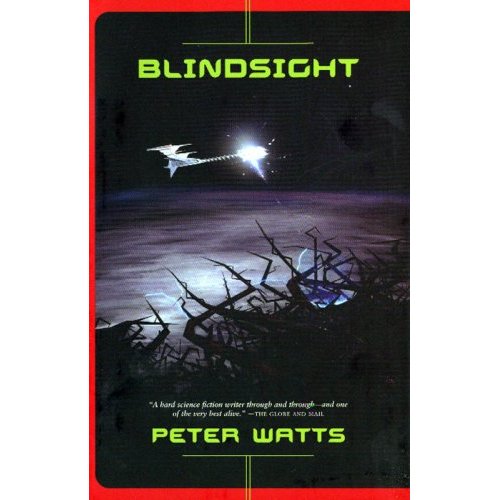
If you've been frequenting popular SFF message boards lately, you are aware that a lot has been said about Peter Watts and his latest hard scifi novel, Blindsight. The more so since the author has made the book available for free on his website www.rifters.com. Many critics and readers opine that Blindsight should be a sure contender for a number of awards, and few people disagree. In addition, my recent interview with Watts leaves no one indifferent, at least judged by the responses I've been receiving. All of which, in the end, is for the best, for I believe that the more people get to know Peter Watts, the more will give Blindsight a shot. Those who do won't be disappointed, let me tell you!
Whenever I hear the appellation "hard-SF" I'm a bit concerned, because such works habitually require a Science degree or Ph. D. in order to understand what the concepts contained within the novel are all about. Neophytes never know if they'll "get it." Not so with Blindsight, though at times things are not that easy to follow.
The notes and refrences found at the end of the book show what sort of extensive research the writing of Blindsight required. Many claim that Peter Watts is on the cutting edge of science fiction. Be that as it may, although Blindsight is based on science and contains loads of scientific facts and jargon, the book also tackles enough philosophical issues to make it truly stand out from the other scifi works out there. As such, that makes Blindsight a demanding but utterly satisfying read.
The permise is traditional: First Contact with an alien race. Typical, you say? Not so, at least beyond that premise. Watts has many surprises up his sleeves, have no fear. The presence of vampires alone should pique your cusiosity.
I found Watts' cast of characters rather unique. When I originally read the blurb, I wondered what the hell it was all about. A linguist with multiple personalities, her brain surgically partitioned into four separate, sentient cores. A biologist so interfaced with machinery that he's barely human anymore. A pacifist warrior. A Synthesist with half his brain gone, there to act as a conduit between the mission and Earth. And a vampire to command them all. I found the story to be well-crafted and interesting, but it's the characterizations that really make Blindsight such a good reading experience.
Some readers have complained that the book is too "talky." I beg to differ in that regard. There is a panoply of facts and information that needs to be conveyed to the readers through the dialogues between the different characters. Otherwise, had this simply been part of the narrative, it would have been info dumping in industrial quantity, which in turn would have turned Blindsight into a sluggish and uneven read.
Kudos to the author for maintaining the omnipresent "don't know what will happen next" feeling throughout the novel. Flashback scenes similar to the ones found in Lynch's The Lies of Locke Lamora help flesh out events and characters. Again, that prevents the "real time" narrative from being filled with too much info.
All in all, if you are looking for a fascinating and thought-provoking book, Blindsight is definitely for you! And with a second printing on the way, you should have no problem getting your hands on a copy. Some say that Blindsight should capture the Hugo Award next year. Well, I wouldn't be surprised if it does. . .
The final verdict: 8/10
For more info on this book: Canada, USA, Europe
The Year that Was
Well, 2006 has certainly been an exceptional year in the fantasy genre. I can't recall a year that saw the emergence of so many new and exciting writers. Hot debuts were numerous, for which we are all extrmely grateful! Moreover, it sure looks as though authors like Scott Lynch, Naomi Novik, Hal Duncan and a few others will not be "one hit wonders," and will entertain us for years to come. Honestly, the future has seldom looked so bright.
For me personally, this year saw the Hotlist skyrocket in ways that I'd never envisioned, even in my wildest dreams. I was incredibly pleased with the site's performance of 2005. Frankly, I doubted that I could do much better. So you can easily understand my shock when I now realize that my hit and page view counts have increased by a margin of more than 400%. Crazy stuff, that!
To my complete surprise, I've just discovered that I've managed to review 44 novels this year. It is surprising when you consider that I've spent the better part of 2006 working and completing a novel, all this between work and life in general. For the life of me, I can't begin to comprehend how I was able to read so many books!
In terms of interviews, I racked up 24 of them. That, more than anything else, is truly amazing. Living in Montreal, I've never had the opportunity to meet my favorite authors. Hence, as a fan of the genre, it's really rewarding to have the chance to chat with authors such as Steven Erikson, George R. R. Martin, David Eddings, Robin Hobb, R. Scott Bakker, etc. Interacting with such people is pretty damn cool, let me tell you!;-) Another thing that turned out to be pretty neat is the fact that most of those interviews were translated in a number of languages. To all of you readers speaking a foreign tongue and wishing to translate a Q&A I've done with an author, just ask me and I'll be happy to oblige. As a French Canadian, I've developed very nice relationships with the communities of two great websites, www.elbakin.net and www.rivages-maudits.com. Un gros merci à Laure, Annabelle, Emmanuel et Thys (désolé, mais je ne connais pas ton nom!) pour leur bon travail!:-) I don't consider myself a particularly gifted interviewer, but most of you appear to enjoy the interviews. That's good enough for me! In addition, 2006 saw my interviews appear on www.sffworld.com, making them available to a much larger audience. Special thanks to Dag for inviting me to get on board!
Back in 2005, I was lucky enough to run a few contests. Nobody was doing it, and I was quite pleased with myself when months of waiting paid off and I was able to find some support from a couple of publishers in that regard. That got the ball rolling. . . This year saw these contests go through the roof! Indeed, in 2006 I ran 47 different contests which allowed you lucky bastards to get your hands on 153 books! Needless to say, I think I've made a few of you happy. I'd like to take this opportunity to thank all the editors, publicists and authors who have helped me make this a possibility. Their support is very much appreciated.
Last but not least, 2006 saw the blogosphere create some waves in the publishing world. And even though the legitimacy of online reviewers continue to be put in question, something finally dawned upon me. Respect is not owed to us out of hand. Respect must be earned. And I'm persuaded that 2006 proved that quite a few bloggers out there are doing a terrific job. That's exactly what we must continue to do. Respect will come in its on time, if it ever comes at all. . . Still, more and more people in the industry recognize the value of this medium, and the SFF online community has been behind us from the very beginning. In and of itself, that's proof that some of us are making enough noise to be heard and listened to.
I'm also pleased to see that more and more bloggers no longer see the others as competition. It's nice to see so many people linking articles/reviews/interviews/yada yada yada posted by other bloggers. United like this, I believe that we represent something bigger, something better. And the more we collectively allow readers to find out about what's good on the internet, the more, in the long run, we help our own cause. So to all you guys -- Jay, William, Rob, Ken, Race, Adam, Larry, Jake, and so many others -- keep up the good work!:-)
Many thanks to everyone -- in and out of the publishing industry -- who has helped Pat's Fantasy Hotlist become what it is today. To the visitors who stop by in such numbers every week, I'll continue to do my very best to deserve your loyalty.
Happy Holidays to you and yours!;-)
For me personally, this year saw the Hotlist skyrocket in ways that I'd never envisioned, even in my wildest dreams. I was incredibly pleased with the site's performance of 2005. Frankly, I doubted that I could do much better. So you can easily understand my shock when I now realize that my hit and page view counts have increased by a margin of more than 400%. Crazy stuff, that!
To my complete surprise, I've just discovered that I've managed to review 44 novels this year. It is surprising when you consider that I've spent the better part of 2006 working and completing a novel, all this between work and life in general. For the life of me, I can't begin to comprehend how I was able to read so many books!
In terms of interviews, I racked up 24 of them. That, more than anything else, is truly amazing. Living in Montreal, I've never had the opportunity to meet my favorite authors. Hence, as a fan of the genre, it's really rewarding to have the chance to chat with authors such as Steven Erikson, George R. R. Martin, David Eddings, Robin Hobb, R. Scott Bakker, etc. Interacting with such people is pretty damn cool, let me tell you!;-) Another thing that turned out to be pretty neat is the fact that most of those interviews were translated in a number of languages. To all of you readers speaking a foreign tongue and wishing to translate a Q&A I've done with an author, just ask me and I'll be happy to oblige. As a French Canadian, I've developed very nice relationships with the communities of two great websites, www.elbakin.net and www.rivages-maudits.com. Un gros merci à Laure, Annabelle, Emmanuel et Thys (désolé, mais je ne connais pas ton nom!) pour leur bon travail!:-) I don't consider myself a particularly gifted interviewer, but most of you appear to enjoy the interviews. That's good enough for me! In addition, 2006 saw my interviews appear on www.sffworld.com, making them available to a much larger audience. Special thanks to Dag for inviting me to get on board!
Back in 2005, I was lucky enough to run a few contests. Nobody was doing it, and I was quite pleased with myself when months of waiting paid off and I was able to find some support from a couple of publishers in that regard. That got the ball rolling. . . This year saw these contests go through the roof! Indeed, in 2006 I ran 47 different contests which allowed you lucky bastards to get your hands on 153 books! Needless to say, I think I've made a few of you happy. I'd like to take this opportunity to thank all the editors, publicists and authors who have helped me make this a possibility. Their support is very much appreciated.
Last but not least, 2006 saw the blogosphere create some waves in the publishing world. And even though the legitimacy of online reviewers continue to be put in question, something finally dawned upon me. Respect is not owed to us out of hand. Respect must be earned. And I'm persuaded that 2006 proved that quite a few bloggers out there are doing a terrific job. That's exactly what we must continue to do. Respect will come in its on time, if it ever comes at all. . . Still, more and more people in the industry recognize the value of this medium, and the SFF online community has been behind us from the very beginning. In and of itself, that's proof that some of us are making enough noise to be heard and listened to.
I'm also pleased to see that more and more bloggers no longer see the others as competition. It's nice to see so many people linking articles/reviews/interviews/yada yada yada posted by other bloggers. United like this, I believe that we represent something bigger, something better. And the more we collectively allow readers to find out about what's good on the internet, the more, in the long run, we help our own cause. So to all you guys -- Jay, William, Rob, Ken, Race, Adam, Larry, Jake, and so many others -- keep up the good work!:-)
Many thanks to everyone -- in and out of the publishing industry -- who has helped Pat's Fantasy Hotlist become what it is today. To the visitors who stop by in such numbers every week, I'll continue to do my very best to deserve your loyalty.
Happy Holidays to you and yours!;-)
Peter Watts Interview

Hi there,
Here is the Q&A William Lexner (Stego) and I did with Peter Watts, author of Blindsight. I'm almost done with the novel, so you can expect a book review soon.
Watts doesn't pull any punches in this interview, making this something you probably should read, even if you have never heard of the author. Candid doesn't begin to describe him!;-)
Enjoy!
----------------------
- For the benefit of those of us new to your work, without giving too much away, give us a taste of the story that is BLINDSIGHT.
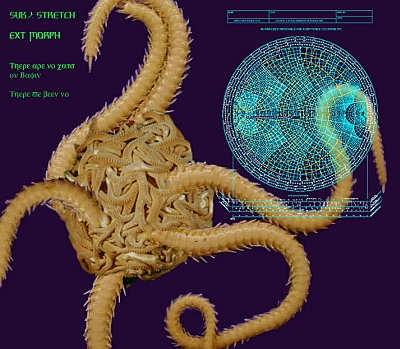
If you want a one-line precise, Blindsight uses the conventions of a first-contact tale to explore the nature and significance of sentience. But I can do better than that-- the whole damn novel's posted on my website, here http://www.rifters.com/real/Blindsight.htm. Or if you're just looking for a taste of cinematic atmosphere, go here http://www.rifters.com/blindsight/BS_main.htm. Poke around a bit. The site's still under construction - I haven't finished the alien necropsy page yet, for one thing - but there's more than enough to give you a sense of the book.
Ah, hell. I may not have finished the necropsy page, but as a bonus for your readers, here's a picture of one of my aliens (see first image at the top of the post)
- I was able to catch a part of your rant against the dustjacket art for BLINDSIGHT at Readercon.
Okay, this is a bit disturbing, since as far as I can remember the only times I talked about that were at a private book-signing session in the Clarkesworld suite (with only two other people present) and at my reading (which was scarcely better attended). So unless this rant of which you speak was just a part of an conversation overheard at a urinal somewhere, I really am a nutjob. With senile dementia.
- What exactly was it about the original art that upset you to the point of having so many alternate covers created?
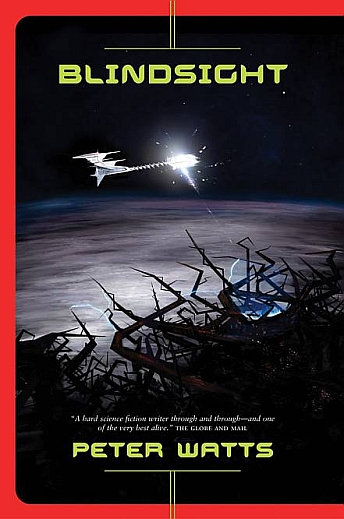
Right off the bat I want to make two points First, the artist, Thomas Pringle, has scads of talent and I really like his stuff (his Blindsight concept sketches that Tor didn't use -- which I recycled for the alternates -- are just gorgeous). Secondly, while I have had my share of problems with Tor over the years, the one thing they never ever dropped the ball on -- prior to Blindsight -- was cover art. No one could ask for better covers than the ones Bruce Jensen conjured up for my rifters books. So I'm slagging neither the artist nor the overall performance of Tor's art department here.Further, I even liked the concept sketch that the final cover was based on -- it wasn't my favorite of the dozen or so that Thomas submitted to Tor, but it was my favorite of the three that Tor passed on to me. In fact, here it is, below left, in all its dark gloomy glory: (see second image at the top of the post)
And here's what they did to it: (see third image at the top of the post)
Nothing at all against the concept, even if it does give away a bit more than I'd like about the McGuffin. But the execution, boys and girls. The layout. It sucks the one-eyed purple trouser eel. The spaceship, originally a dark ominous contraption that evoked the hardware of 2001 or Alien, has inexplicably morphed into some brightly-lit Buck-Rogers corkscrew with wings. It has the texture and detail of a pencil sketch imported from an entirely different illustration-- the lighting isn't even consistent with the rest of the image. The red border, the Exorcist-pea-soup color of the lettering-- the word "lurid" comes to mind. And the blurbage-- for some reason, every blurb on the cover raved about some book other than Blindsight, which to me (speaking as an sf reader here, not a writer) is always cause for suspicion. This is especially puzzling because I know that Tor had some really kick-ass Blindsight-specific quotes in hand, and I've never received a satisfactory answer as to why at least one or two them weren't used.
So. Cover art and blurbs, which I'm given to understand comprise two of the three primary variables upon which retail chains base their purchasing decisions (the third being author's previous sales figures, which can't be tweaked retroactively short of time travel and/or fraud, and which in my case were evidently pretty dismal). Is it any wonder that one of the two biggest book chains in the country chose not to preorder any copies?
Now I should point out that a few people have told me that they don't mind the official cover at all, and one or two (not even connected with the industry) opine that the official cover is actually better than any of my alternates. But that seems to be the opinion of a small minority. And when I saw the sketches that Tor opted not to use, I just about cried. They were great. They conveyed loneliness, they conveyed carnage, they conveyed darkness and light and haunting mystery, and it just seemed that they all put a more evocative face on my words than did the official jacket. So, with the artist's permission, I did the alternates (which also come with relevant blurbage)
(BTW, if any of you are interested in how I envisioned Theseus when I wrote the book, check out http://www.rifters.com/blindsight/theseus.htm. There, you'll find a full-frontal-nudity annotated shot. (Fully clothed, as in the book, Theseus wears a carapace that makes it look a lot less interesting to the geeky eye.) It's based on one of Pringle's sketches, although I've radically changed the morphology of that ship to reflect my mind's eye.)
- And for the collectors out there, are these alternate covers still available?
Infinitely available. There are half a dozen alternates (seven if you could the featureless black "Smell The Glove" homage) Just go to
- On your website www.rifters.com
I really, really don't like conventional forms of self-promotion. While I love hanging around with people at cons, I tend to avoid doing signings, launches, and readings because I'm always afraid that nobody's going to show up. So online promotion's pretty much the only other option.
A lot of author websites are just that-- they promote the author, they jump up and down and thump their chests and shout out "Look at Me! Buy My Books!" It is to cringe-- and I'm not being all smug and superior here, because I too crave fame and adulation. I'm as much of an attention-slut as anyone in this business (or I would be, if more people paid attention), but although I am a needy sonofabitch, I don't want to look like one. So what do you do if you want to draw people to your website, but you don't want to make yourself look like a narcissist?
Well, if you're not going to promote yourself, the only other thing to promote is the material. So that's what I do. I build a little parallel environment, an immersive thing that plays it straight and tries to make you forget that you're even talking about a book, written by a professional liar. I want the site to feel more documentary than fictive, which is why I present it in the form of confidential memoes and surveillance telemetry excerpts and so on. And when you do that-- when your goal is to induce the sense that the surfer is actually spying on a real future-- then you can't afford to intrude as an author and point to yourself, because that shatters the illusion. (Although I do have one wing of the site - "The Real World" -- which is more conventionally All About Me.)
Overall, I think it's a pretty innovative approach. The only down side is that, judging by my hit counts, it doesn't actually work.
- What was the spark that generated the idea which drove you to write BLINDSIGHT in the first place?
A throwaway line in an afterword by Richard Dawkins, from an early-nineties anthology of ecological and evolutionary essays collected into a light blue trade paperback with a picture of a wasp's nest on the front. I do not remember the name of the book, and I can't find it on Amazon (at least, not under "Dawkins").
Anyway, he was winding down the book, and mentioning all the things we still didn't know about life, and consciousness was on the list: "We don't know what it's good for," he remarked (I'm paraphrasinig here); "one can certainly imagine a meat robot, shaped by natural selection, that behaves exactly the way we do." Of course, he was just rehashing the classic Zombie argument, but this was the first time I'd ever encountered it and it kind of got into my brain and festered. For over ten fucking years it festered. And if I've made any contribution to the field at all, it's that perhaps I'm the first one to give up. (SPOILER ALERT: skip the rest of this answer if you don't want to read Blindsight's thematic punchline.) Everyone else is still looking for some reason for self-awareness to exist, some adaptive advantage that it confers. And I really, really hope they're right, but I can't think of one. And you know, in evolution, not everything is adaptive. Most mutations are neutral or deleterious. So maybe there is no advantage, maybe it's a fluke, maybe it's actually maladaptive and on the way out. I suspect a lot of people might be haunted by that possibility. I think I'm the first one to openly fart at the funeral, though.
- Were there any perceived conventions of the scifi genre which you wanted to twist or break when you set out to write BLINDSIGHT?
Well, I was a little tired of aliens, both literary and cinematic, that basically seem to be humans in rubber suits with one or two cultural knobs cranked to eleven. On the other hand, it's a bit too easy to throw a big black slab at the audience and say "There's no point in even trying to understand the aliens because they're, you know, alien". If something evolved in Darwin's universe, it's damn well going to adhere to certain natural laws, and that makes it tractable. So I wasn't so much breaking a convention as I was treading the razor's edge between two conventions. I tried to ensure that everything was deeply weird-- life without genes, intelligence without conventional cephalisation-- but nothing was unjustifiable.
And of course there are the vampires. That was just a kind of intellectual wank for my own amusement: I wanted to see if I could take one of the most absurd and unjustifiable creatures ever to spring from myth, and plausibly handwave a scientific justification for all those absurd elements. Again, I wasn't really shattering a convention (although I was definitely poking it with a stick and laughing at its discomfort); I was reinforcing the standard mythology using biological rationales. I didn't know if I'd be able to pull it off until I came up with the Crucifix Glitch; after that it was, Hah! Bring it on!
- What do you feel is your strength as a writer/storyteller?
Well, I think my prose generallly kicks ass. And I'm more than decent at thought experiments. Characterization, maybe not so much. I'm kind of like the Rush of character development: I do one or two things really well, but I know my limits. My characters are always quite human, but they're not very humane. And I've been told that here in the real world, at least one or two people are.
I'd kill to have characters as heartfelt as Elisabeth Bear's, for example.
- Given the choice, would you take a New York Times bestseller, or a Hugo Award? Why, exactly?
NYT bestseller This has nothing to do with literary snobbishness (Christ knows I have to put up with enough of that shit here in Canada, what with a literary establishment that won't even look at a story unless it's about the lonely young daughter of a distant father, coming to terms with her burgeoning lesbianism on the misty and windswept shores of the Canadian Pacific. I mean, give me a fucking break.) The simple truth is, I got cats to feed, and rent to pay, and while I'd certain take any accolade anyone wanted to shove in my face, a NYT bestseller simply implies more bucks in the bank.
Unless it doesn't. In which case I'd go for the Hugo.
- In all honesty, I must admit to never having heard of your work prior to BLINDSIGHT, yet you have a few novels in your backlist. Can you tell us why we should pick up your earlier work?
The best reason for reading my stuff was perhaps best summed up by James Nicoll, who once said: "Whenever I feel my will to live becoming too strong, I read some Peter Watts". Other than that, I got nothing.
- Other than BLINDSIGHT, which of your works do you believe to be your strongest?
That depends what you're looking for. In my experience, people who aren't habitual readers of sf tend to prefer Starfish: it's heavy on ambience and angst and environment. It's moody, and you can kind of ease into it without too much background. Maelstrom, on the other hand, tends to appeal more to hardcore tech-heads: it's jam-packed with ideas, it hits the ground running, and it has a much denser feel than its predecessor. A lot of people who clapped politely for Starfish stood up and cheered for the sequel; conversely, a lot of people who loved Starfish felt completely clobbered by Maelstrom, and couldn't get into it.
If you've got a fetish for conspicuous consumption, Behemoth is definitely your choice. You get to pay twice for the same novel.
- The fact that you have your own website is an indication that interaction with your readers is important to you as an author. How special is it to have the chance to interact directly with your fans?
Sometimes it's the only thing that keeps me going. Interactions with publishers and agents tend to be more frustrating than encourageing. And given my royalties, there's no way I'm in this for the money.
It's actually one of the coolest things about being an author: people who are way cooler than you look you up and want to buy you beers (in fact, I'm nursing a bit of a hangover from one such an event even as I type). If I ever need the services of a private eye, a criminal lawyer, or a black-ops military computer dude- or if I need a Porsche serviced- I now know where to go.
Of course, the downside is the occasional stalker who lurks in the lobby of the Holiday Inn waiting for you at 2am. And no matter how interesting one's correspondence with fans can be, they tend to devour all your time. (Which is why I've owed certain e-mails for six months or more. To those people-- you know who you are-- er, sorry.)
- Are you surprised by what little support you receive from the Canadian media? Writers like Steven Erikson and R. Scott Bakker rank among the best speculative fiction authors out there, yet you Canucks appear to get very little recognition in your own country.
Yeah, well you know what they say about a prophet in their own land.
Actually, there are pockets of support: John Burns at the Georgia Straight isn't shy about noticing my stuff; Douglas Barbour gets pro-sf pieces into the Edmonton Journal now and then; and of course, Spider Robinson sings the genre's praises whenever he can in the Globe and Mail. Even the official Canadian Literary Establishment pay tribute in their own peculiar way, generally by grabbing ideas the genre has been playing with for decades and repackaging them as "real" literature. I was quite impressed, for example, to read that Margaret Atwood had singlehandedly pioneered the idea of a biotech dystopia Oryx & Crake. (Although I should add that I am quite a fan of Atwood's prose, and to give the devil her due she does seem to have become a bit less strident with that I-don't-write-sf-because my-stuff-is-good schtick that she was so fond of a few years back. If only the same could be said for the Canada Council.)
Fuck 'em. You want Canadian sf, read On Spec.
- A lot has been said on the subject of online reviewers vs print reviewers these last few months. Many people in the industry still don't hold online reviewers in high esteem, while others appear to grudgingly agree that a few of them are legitimate. What's your take on the topic?
I haven't been following that debate. My sense, though, is that if there's a significant difference between online and print reviewers, it's one of clarity as opposed to substance. I have read supremely articulate and insightful reviews on personal blogs; I have read extremely shallow and inattentive reviews in mainstream print. But insights aside, I think the print reviewers tend to be better at the actual craft of writing. This only makes sense, since you have to pass at least some sort of rudimentary journalistic muster before you get a print column; any doof with a freebie Livejournal account can be an online reviewer. (And indeed, some of the most articulate online reviews I've read hail from people with roots in print)
- Honestly, do you believe that the speculative fiction genre will ever come to be recognized as veritable literature? Truth be told, in my opinion there has never been this many good books/series as we have right now, and yet there is still very little respect (not to say none) associated with the genre.
That ship may have sailed. There was a time, not so long ago, when science fiction was the only literature capable of containing some of the grander and scarier possibilities waiting down the road. When you're the only literature capable of plotting a course through the future, you damn well deserve respect. (When it comes to real-world relevance, a story about the ethics of cloning is certainly going to kick the shit out of yet another dreary coming-of-age tale set in post-World-War-Two Ireland.) But more and more of those worldchanging elements are imminent now, or even passe. We've already got clones and gengineering. We've got rudimentary nanotech, proof-of-principle invisibility cloaks, melting icecaps, underwater resorts under construction, AI that some people describe as "conscious", and - just maybe - working prototype FTL inside a decade. The fact that you or I may be supremely sceptical of some of these claims doesn't matter - the point is that these undeniably sfnal concepts are being discussed in mainstream media as serious news stories. You don't have to postulate new technology to write science fiction any more. You don't have to step outside the present day. The fundamental role of speculative fiction is to address the question "What if things were different?". Well, here we are, in the twenty-first century. And things are different. And Bruce Sterling and William Gibson are writing mainstream novels that happen to feel exactly like sf.
So what does this leave us? It leaves us nerd-rapture singularity stories - which will either staledate in a decade or two (if the Kurzweillians are wrong) or will become irrelevant along with everything else during the Great PostHuman Uplift (if they're not). It leaves us with far-future Roman Empires in Space. It leaves us with thought experiments about the shape life might take elsewhere in the universe. What it won't leave us with is any monoply on the relevant, world-changing ideas that science fiction has always hung its hat on.
Don't get me wrong. Science fiction deserved respect. It deserves respect. But perhaps it's tougher now to make the case that the world needs something explicitly called science fiction, because so many of these issues can now be explored in mainstream fiction. And Time Magazine will always have a way bigger audience than Analog.
(I hope I'm wrong about this, by the way. I would welcome rebuttal. I rather like this particular ghetto.)
- What can you tell us of your upcoming projects?
This implies that there are going to be any.
I'm actually pretty burned out after Blindsight -- not so much the writing per sé, but the whole business life of the midlist writer. Blindsight has been getting amazing reviews. People keep talking about it as a potential award-winner (and it might have been, if Worldcon wasn't scheduled for Japan in '07). And yet, seven major publishers turned it down flat, and the eighth - well, let's just say the cover art was the tip of the iceberg. When I started down this road I would sit at my keyboard, wired with excitement, thinking about how best to explore an idea. Now, I sit and wonder how many of those explorations will get mutilated because the market has changed again and the bean-counters only concern with "story" is whether the paper it's printed on will retail for less than $24.95. (And to preempt those who might think I'm just another whiney author with an inflated sense of the deathlessness of his prose; even my editor has choked on these constraiints. He was forced to ask me to cut four thousand words from Blindsight while at the same time admitting that he couldn't see any way to do that without compromising the story. And that was after I'd already cut several K from the submitted draft. And that was after submitting a draft that was ten thousand words shorter than the contract called for, because my previous novel got split in half for being too long and I wanted to make sure that never happened again.)
So, yes. There may be other projects. I still have novels incubating in my head - I'm even playing with the idea of a faux-documentary coffee-table book called "Proceedings of the First Biennial Conference on the Evolutionary and Biology of Vampires", although Tor has told me they aren't interested. But for the moment, at least, the fun has gone out of it.
Many thanks again for taking the time to answer our questions. We wish you continued success in your writing career and best of luck with BLINDSIGHT.
Thanks. I think I'll go kill myself now.
This week's New York Times Bestsellers (December 19th)
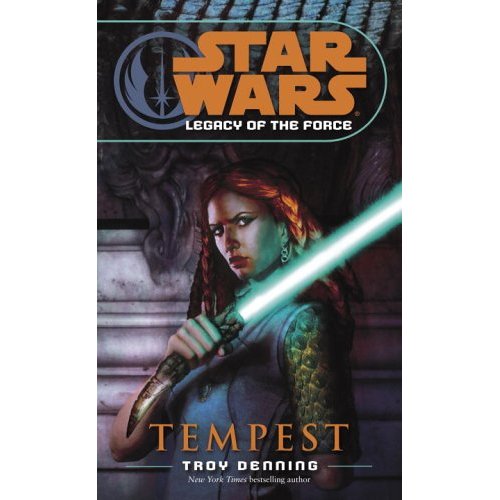
Nothing to report in hardcover. . .
In paperback:
Robert Jordan's Knife of Dreams is up two positions, ending its second week on the bestseller list at number 18. For more info about this book: Canada, USA, Europe.
Troy Denning's Star Wars: Legacy of the Force: Tempest debuts at number 21. For more info about this book: Canada, USA, Europe.
Eric S. Nylund's Ghosts of Onyx is up seven spots, finishing its fifth week on the NYT list at number 24. For more info about this book: Canada, USA, Europe.
Brian Ruckley Interview

Hi there!
Well after reading Winterbirth, one of this year's very good debuts, I knew I had to interview the author. So here is the resulting Q&A. You'll see that Ruckley has a lot of interesting things to say. If there's still room on your Christmas list, you might want to add Winterbirth to your other gift ideas!
Enjoy!;-)
---------------------------
- For the benefit of those of us new to your work, without giving too much away, can you give us a taste of the tale that is WINTERBIRTH?
It’s at the gritty, heroic end of the fantasy spectrum, I guess. The basic plot revolves around an old, unresolved conflict (between two factions called The Black Road and the True Bloods) starting up again, and how various characters get swept up in it. The main emphasis is really on how this cast of characters survive - or don’t - when their world starts coming apart all around them. And in the middle of everything, there’s this one character who eventually turns out to be much more dangerous than anyone really appreciated …
- What can readers expect from the subsequent two volumes of The Godless World trilogy?
Well, pretty much everyone involved finds themselves getting deeper into trouble. Bk 2 picks up more or less right after the end of WINTERBIRTH. There are some fairly drastic plot developments in it that set up Bk 3, so that by the end of that last book, a lot of the characters who thought they had a firm grip on events have found out they don’t. We see (I’m using the word ‘see’ loosely here) a little bit more of one of the other non-human races, and there’s plenty more fighting, death, victory, defeat, all that kind of stuff. And more snow. And shellfish. There are two buckets of shellfish in Bk 2.
- What's the progress report pertaining to the second and third volume of the series?
The progress report is that there has been progress: Bk 2 is nearing completion. Bk 3 exists as notes and thoughts filed away in the back of my head.
- Since WINTERBIRTH is your fantasy debut, could you tell us a little of the road that saw this one go from manuscript to published novel?
It’s been a painless but quite long process. One of the things I really didn’t appreciate when I was daydreaming about being a writer back in the 1990s was just how long the time lags can be. I think from me having what I thought at the time might be a final, complete manuscript, through finding an agent, then finding a publisher, then the book actually being in bookshops has been something like four years. Four years! I think my key pieces of good fortune were in getting an agent quite quickly since that takes some of the pressure off (they get to worry about finding a publisher instead of you) and then getting a publisher who had some good and constructive suggestions to make regarding the text, but kept them general and left it up to me to work out how best to implement them.
- What's been the overall response you've received from readers concerning WINTERBIRTH?
Pretty good - it’s been interesting the extent to which different people pick up on different elements of the story: some people are interested in the Black Road, some in the Kyrinin, some in the characterisation, some in the world-building etc. That’s kind of obvious, I guess, but I’m still the wide-eyed newbie staring around and finding all sorts of things about the process interesting and surprising. The kind of feedback I’ve been most relieved to hear is when people say the pacing’s OK, and the plot keeps them interested. I figure the one thing you absolutely have to do as a writer is get people to want to turn the page and find out what happens next. So long as I get at least a reasonable proportion of the audience involved like that, I’m pleased.
- How does it feel to see that WINTERBIRTH will be one of the first novels published by Orbit's American imprint?
Like I got pretty lucky, really. At the time I signed the contract with Orbit in the UK, there was no such thing as Orbit USA. In between me submitting the final manuscript and it getting published in Britain, suddenly it was: ‘By the way, we’ve decided to set up in the US, and we’d like to take WINTERBIRTH with us.’ It’s all mildly nerve-inducing too, mind you - there’s something simultaneously cool and vaguely intimidating about being part of a ‘launch’ line-up.
- Given the choice, would you take a New York Times bestseller, or a World Fantasy Award? Why, exactly?
At this stage in my career (i.e. just stumbling off the starting block), it’s no contest, I’m afraid: NYT bestseller. Its impact on my (or anyone’s) prospects of making the whole writing thing work as a career choice would be vastly more significant. I don’t expect either of these things to happen to me in the near future, so I doubt I’ll have to weigh up the pros and cons too carefully.
- What do you feel is your strength as a writer/storyteller?
I’d say I’m reasonably good at giving characters a bit of texture, not bad at creating a certain sense of place and context for the action to happen in, and hopefully I’ve done reasonably well in maintaining a pace and direction to the narrative. People have told me I’m quite good at writing violence too, which I assume is meant as a compliment. I suspect, though, that this is a line of work in which you’re never likely to be 100% satisfied with your own efforts. Even if you think you’ve managed to do something well, you’re still left thinking ‘I’m sure I could do it better …’
- What was the spark that generated the idea which drove you to write WINTERBIRTH and the rest of the series in the first place?
Well, if you go back far enough, I guess the very first spark was watching the disintegration of the former Yugoslavia on TV in the early 1990s. There were all these people killing each other largely because of hatreds that dated back hundreds and hundreds of years, and it just struck me that it would be interesting to do fantasy fiction that recognised the immense destructive potential of history, and nationalism, and so on. Before anyone starts worrying that WINTERBIRTH’s some heavy historical text, I should say the book that eventually emerged is only distantly related to those very first inklings of an idea, but you can still see some faint traces of that first thought in there, I think.
- Were there any perceived conventions of the fantasy genre which you wanted to twist or break when you set out to write WINTERBIRTH and its sequels?
Maybe tweak a few conventions, but not necessarily break them. For example, I was going through a brief bout of grumpiness about the prevalence of fantasy heroes whose sole function in the plot is to embody some ancient prophecy or other, since that didn’t seem to leave very much room for free will and choice, so I thought I’d do a story where the closest thing to a prophecy was actually on the side of the bad guys (though I don’t really think of anyone in the book as bad guys, to be honest). And I thought, instead of having a dark lord or something similar, I’d have the key villain emerge, and change, as the story progressed.
More than any specific tinkering with individual conventions, though, I think I wanted to go for a tone or texture that at that time didn’t seem too common in the genre: a bit grittier, a little injection of realism, slightly more shading to the characters, that kind of thing. Of course, I started thinking about the trilogy so long ago that by the time WINTERBIRTH actually got published, the conventions had changed anyway. There’s a lot more grittiness and complex characters, and a lot fewer stereotypical dark lords, about these days. I mean, GRRM, Steven Erikson … kind of redefining some of the baseline, aren’t they?
- Characters often take a life of their own. Which of your characters did you find the most unpredictable to write about?
I don’t find my characters too unruly, on the whole. Generally speaking they do what I tell them to do - and if they don’t, I go back and rewrite them to make them more compliant. That’s the godlike power of a being an author! That said, I do find some characters (the Shadowhand and Aeglyss spring to mind) more enjoyable to write than others, and a couple have somehow manipulated me into giving them bigger parts than I originally planned: there’s one called Roaric who looks like he’s going to get a bit more coverage than I expected, and Tara Jerain, the Shadowhand’s wife, snuck into book two as a point of view character while I wasn’t looking.
- For obvious reasons, many authors steer clear of religion. And yet, with the Black Road you have made religion an integral part of the tale. Was that a deliberate choice right from the beginning?
Yes and no - it’s more a consequence of my initial choices than a central decision in its own right. As I mentioned, my first thought was to write about how history and the past shaped events rather than religion specifically. Fairly early on, though, I came up with the idea of banishing the gods from my invented world, and that led to the notion of having a faction who were driven by the desire to bring the gods back. Almost all the choices I’ve made are story-driven rather than theme-driven, to be honest.
Even now, anyway, I’m not sure it’s really about religion - the characters may not see it this way, but I suspect the Black Road is about, not so much a religious desire to bring the gods back (who’s to say there ever were any real gods, anyway?) as a more generalised desire to recover some notional, lost ‘golden’ age, i.e. it’s still about people being fixated on the losses and injustices of the past, rather than on the possibilities of the present or the future.
- The fact that you have your own website is an indication that interaction with your readers is important to you as an author. How special is it to have the chance to interact directly with your fans?
It’s been a real pleasure, as a newcomer, to discover the whole website and interaction thing. I was kind of aware, before I got published, that there was a lot of genre-related stuff going on out on the internet, but it’s been a real eye-opener just how active and lively the community is. I think the whole interaction thing is potentially fantastic, though I don’t think I’ve figured out yet how best to use the technology. I’ve got a bit of a blog going, and a section on the website where readers can get some more background information about the world in the books - hopefully it’s just a start.
- Honestly, do you believe that the speculative fiction genre will ever come to be recognized as veritable literature? Truth be told, in my opinion there has never been this many good books/series as we have right now, and yet there is still very little respect (not to say none) associated with the genre.
Do I think the spec fic genre as a whole will ever be regarded by the arbiters of ‘high’ literary taste as being equally valuable as literary fiction? No. Do I think that matters? No, not particularly. Like most other genres - generalising horribly - sf tends to be more interested in things like plot, narrative, speculation (obviously), commercial success even, than a lot of mainstream fiction is. Quite a bit of literary fiction seems to me to have abandoned the old-fashioned virtues of telling an exciting, engaging story. That said, there will always be a handful of books that cross the divide and achieve wider notice and respect - I suspect they will generally be stand-alones, though, not series. Not many faster ways to alienate the literati than writing a fantasy trilogy. No Nobel Prize for me, then … ho hum.
- In the long run, what will differentiate The Godless World from the other popular fantasy series on the market?
Its unprecedentedly high sales figures. As if. No, I’d settle for people thinking it was an engaging story, well told, and with good, believeable characters. Actually, one differentiating characteristic does occur to me: it is, I promise, only a trilogy. The story has a definite beginning, middle and end, so there will be no Books Four, Five etc.
- Do you have any plans beyond this fantasy trilogy?
I have no shortage of ideas, but no definite plans yet. My publishing contract covers just these three books at the moment. I’d certainly like to write more fantasy - I’m pretty sure I’ll get better at it the more I practice.
- Anything you wish to add?
Only to say thanks for inviting me over here, and to invite anyone who’s interested to have a look at www.brianruckley.com, and use it to do some of that interaction stuff we were talking about earlier, if they feel like it.