Official Game of Thrones promotional posters


Looking good! =)

Can fantasy ever tell the truth?

Thanks to Mark Charan Newton for linking this in his Fantasy, Truth-telling, Escapism post.

From the Guardian:

There is nothing wrong with escaping reality now and again. Like a well brewed ale, or a good malt whisky, a finely crafted escapist fantasy can be a thing of joy and beauty. But while the occasional tipple can be a good thing, most of us recognise that a bottle of Jameson's a night is unhealthy for body, mind and soul.

An unfiltered diet of escapist fantasy blockbusters can be similarly unhealthy. As master anti-fantasist M John Harrison expresses it in his essay The Profession of Science Fiction while discussing the appeal of fantasy to young children terrified by adult life, "Many fantasy and SF readers are living out a prolonged childhood in which they retain that terror and erect – in collusion with professional writers who themselves often began as teenage daydreamers – powerful defences against it."

For many literary readers it is this suspicion of escapism that deters them from fantasy. Literary fiction is rooted in the idea of engaging with reality as it is, of facing all the pains and pleasures of life and examining them in detail. Iris Murdoch described great writing as having "a conception of truth, a lack of illusion, an ability to overcome selfish obsessions" and as being the work of a "free, unfettered, uncorrupted imagination." Bad writing for Murdoch, and for the generation of literary writers surrounding her, could be defined as "the soft, messy, self-indulgent work of an enslaved fantasy".

[...]

As an escapist experience, fantasy has fallen in to disregard with writers and readers who seek to understand the often difficult and painful truths of real life. But writers such as Brockmeier, Miéville and Valente are returning to fantasy for the many ways it can unlock truth. Perhaps it is a consequence of living in an era of such radical change, but the fantastic seems once again to play a part in expressing the truth of our time.

Follow this link for the full article.

Read these books!

The better part of the electronic correspondence I receive from SFF fans has to do with recommendations. And even though I've posted reading lists from time to time, I guess that it's not enough.

So here are 5 series which are, in my humble opinion, almost criminally unread. So look no further if you want terrific SFF reads!


- The Cassandra Kresnov series by Joel Shepherd

- Crossover (Canada, USA, Europe)
- Breakaway (Canada, USA, Europe)
- Killswitch (Canada, USA, Europe)

Here's the blurb from the first volume:

Crossover is the first novel in a series which follows the adventures of Cassandra Kresnov, an artificial person, or android, created by the League, one side of an interstellar war against the more powerful, conservative Federation. Cassandra is an experimental design — more intelligent, more creative, and far more dangerous than any that have preceded her. But with her intellect come questions, and a moral awakening. She deserts the League and heads incognito into the space of her former enemy, the Federation, in search of a new life.

Her chosen world is Callay, and its enormous, decadent capital metropolis of Tanusha, where the concerns of the war are literally and figuratively so many light years away. But the war between the League and the Federation was ideological as much as political, with much of that ideological dispute regarding the very existence of artificial sentience and the rules that govern its creation. Cassandra discovers that even in Tanusha, the powerful entities of this bloody conflict have wound their tentacles. Many in the League and the Federation have cause to want her dead, and Cassandra’s history, inevitably, catches up with her.

Cassandra finds herself at the mercy of a society whose values preclude her own right even to exist. But her presence in Tanusha reveals other fault lines, and when Federal agents attempt to assassinate the Callayan president, she finds herself thrust into the service of her former enemies, using her lethal skills to attempt to protect her former enemies from forces beyond their ability to control. As she struggles for her place and survival in a new world, Cassandra must forge new friendships with old enemies, while attempting to confront the most disturbing and deadly realities of her own existence
.


- The Nessantico Cycle by S. L. Farrell

- A Magic of Twilight (Canada, USA, Europe)
- A Magic of Nightfall (Canada, USA, Europe)
- A Magic of Dawn (Canada, USA, Europe)

Here's the blurb from the first volume:

An intricate tale of murder and magic, deception and betrayal, Machiavellian politics, star-crossed lovers, and a world on the brink of devastating war.... Over the decades and slow centuries, the city of Nessantico spread her influence in all directions. Nessantico gathered to herself all that was intellectual, all that was rich, all that was powerful. There was no city in the known world that could rival her. But there were many who envied her...


- The Magister Trilogy by C. S. Friedman

- Feast of Souls (Canada, USA, Europe)
- Wings of Wrath (Canada, USA, Europe)

Here's the blurb for the first volume:

At the end of her bestselling Coldfire Trilogy, C.S. Friedman challenged readers to imagine what a world would be like if sorcery required the ultimate sacrifice--that of life itself. Now, in a groundbreaking new fantasy novel, FEAST OF SOULS, she introduces us to a terrifying new world in which the cost of magic is just that--a world in which the fuel for sorcery is the very fire of the human spirit, and those who hunger for magical power must pay for it with their lives. In this epic tale of terrifying shadows and desperate hope, the greatest threat of all may not be that of ancient enemies returned, or ancient wars resumed, but of the darkness that lies within the hearts of men.

In the court of High King Danton Aurelius, young Prince Andovan lies dying of a mysterious malady known only as the Wasting. Desperate to save his son from this incurable disease, the High King summons a council of Magisters to aid him. These shadowy, seemingly immortal sorcerers rarely ally for any purpose, but in this cause they are willing to unite. For there is one fearsome secret the Magisters guard above all others, and that is the nature of the transformation that sets them apart from all other sorcerers, allowing them to draw on the power of a human soul without dying for it... a secret that might now be exposed if the High King learns too much about his son's illness. For the dread disease called the Wasting is in fact a sign that some Magister is stealing the young man's soulfire to fuel his sorcery, and that is a truth that must be hidden from the mortal world at any cost.

Now the Magisters must hunt down one of their own kind before the High King learns the truth, and find a way to sever the link between Andovan and his killer. But they have not counted on the prince's determination to control his own fate, nor on the existence of a young woman, schooled in their own arts, who will soon shake their secretive society to its very roots.

Sold into prostitution by her peasant mother while she was still a child, Kamala has learned the hardest lessons life can teach. Her mane of wild red hair and her diamond-hard eyes reflect the wellspring of strength and defiance within her--a hunger to live by her own rules at any cost. Honed by cruelty and poverty, she has become a uniquely fierce creature, and with the help of a reclusive Magister may well become the first of her sex to master true sorcery. But at what cost to herself, and to her world?

Against a backdrop of glittering kingdoms and darksome prophecies these two young people will be forced to confront their destinies...while in the shadows of their world an ancient Evil is stirring for the first time in centuries, seeking allies in a cause more terrible than any living man can imagine
.


- The Jump 225 Trilogy by David Louis Edelman

- Infoquake (Canada, USA, Europe)
- MultiReal (Canada, USA, Europe)
- Geosynchron (Canada, USA, Europe)

Here's the blurb from the first volume:

How far should you go to make a profit?

Infoquake, the debut novel by David Louis Edelman, takes speculative fiction into alien territory: the corporate boardroom of the far future. It’s a stunning trip through the trenches of a technological war fought with product demos, press releases, and sales pitches.

Natch is a master of bio/logics, the programming of the human body. He’s clawed and scraped his way to the top of the bio/logics market using little more than his wits. Now his sudden notoriety has brought him to the attention of Margaret Surina, the owner of a mysterious new technology called MultiReal. Only by enlisting Natch’s devious mind can Margaret keep MultiReal out of the hands of High Executive Len Borda and his ruthless armies.

To fend off the intricate net of enemies closing in around him, Natch and his apprentices must accomplish the impossible. They must understand this strange new technology, run through the product development cycle, and prepare MultiReal for release to the public—all in three days.

Meanwhile, hanging over everything is the specter of the infoquake, a lethal burst of energy that’s disrupting the bio/logic networks and threatening to send the world crashing back into the Dark Ages.

With Infoquake, David Louis Edelman has created a fully detailed world that’s both as imaginative as Dune and as real as today’s Wall Street Journal
.


- The Deryni Saga by Katherine Kurtz

The Chronicles of the Deryni

- Deryni Rising (Canada, USA, Europe)
- Deryni Checkmate (Canada, USA, Europe)
- High Deryni (Canada, USA, Europe)

The Legends of Camber of Culdi

- Camber of Culdi (Canada, USA, Europe)
- Saint Camber (Canada, USA, Europe)
- Camber the Heretic (Canada, USA, Europe)

The Histories of King Kelson

- The Bishop's Heir (Canada, USA, Europe)
- The King's Justice (Canada, USA, Europe)
- The Quest for Saint Camber (Canada, USA, Europe)

The Heirs of Saint Camber

- The Harrowing of Gwynedd (Canada, USA, Europe)
- King Javan's Year (Canada, USA, Europe)
- The Bastard Prince (Canada, USA, Europe)

King Kelson's Bride (Canada, USA, Europe)

In the King's Service (Canada, USA, Europe)
Childe Morgan (Canada, USA, Europe)

Deryni Anthologies

- The Deryni Archives (Canada, USA, Europe)
- Deryni Magic (Canada, USA, Europe)
- Deryni Tales (Canada, USA, Europe)

For more information about this genre-defining historical fantasy series, check out the wikipage devoted to the Deryni saga. This is one of the very best fantasy series of all time (in this house at least), so I encourage everyone to read it!

There are enough books here to keep you out of trouble for quite some time! ;-)

Game of Thrones: House Targaryen and House Lannister


These clips are killing me!

Game of Thrones: House Baratheon and House Stark


Well, this ain't going to be some Legend of the Seeker crap!

Only a few more weeks to go before the premiere on HBO!!!

Joe Abercrombie and Steven Erikson news


This from the Subpress website:

First: The remaining numbered copies of Joe Abercrombie’s Before They Are Hanged are now open to the general public to order. Please feel free to snag a copy, which will be especially important as we’ve just reached agreement to publish signed limited editions of Joe’s other novels, Best Served Cold, and The Heroes.

Those who buy Hanged will have dibs on volume three in The First Law trilogy, and the other limited editions, provided they order each subsequent volume.

Second, orders for the Limited and Lettered editions of Steven Erikson’s Deadhouse Gates are also open to the general public. Purchasing Gates will give you the rights of first refusal on the next volume in the series.
---------------

Given the beauty and quality of the limited editions of both The Blade Itself and Gardens of the Moon, you might want to hurry up and reserve your copies today!

Quote of the Day

To disagree with three-fourths of the British public is one of the first requisites of sanity!

- MARK HODDER, The Curious Case of the Clockwork Man (Canada, USA, Europe), once more borrowing from Oscar Wilde.

Hard to argue with that. . . :P

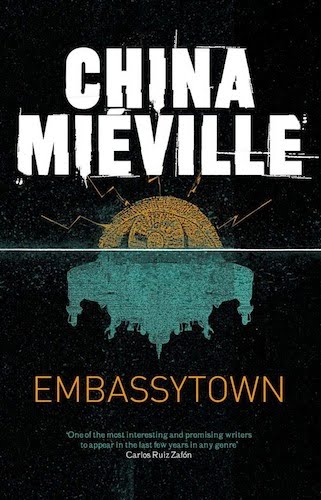
Extract from China Miéville's EMBASSYTOWN

Pan Macmillan have made the prologue and the first chapter from China Miéville's upcoming Embassytown (Canada, USA, Europe) available on their website.

Here's the blurb:

Embassytown: a city of contradictions on the outskirts of the universe.

Avice is an immerser, a traveller on the immer, the sea of space and time below the everyday, now returned to her birth planet. Here on Arieka, humans are not the only intelligent life, and Avice has a rare bond with the natives, the enigmatic Hosts - who cannot lie.

Only a tiny cadre of unique human Ambassadors can speak Language, and connect the two communities. But an unimaginable new arrival has come to Embassytown. And when this Ambassador speaks, everything changes.

Catastrophe looms. Avice knows the only hope is for her to speak directly to the alien Hosts.

And that is impossible
.

You can read the excerpt here.

When it rains, it pours (especially if you are Ian Tregillis)

Poor Ian Tregillis. . .

It was obvious that something was wrong and that The Coldest War, sequel to the excellent Bitter Seeds (Canada, USA, Europe), would once again be postponed. So no real surprise there when the author made that particular nugget of information public.

What is shocking is the ordeal Tregillis went through these last few years, what with all those delays, none of which can be attributed to him.

To all of you who believe that everything is peaches and cream as soon as you get an agent and sign a book deal, I encourage you to read Tregillis' latest post. Hard to believe that Tor Books made him go through all that crap. Shame on them, really. . .

This is a sad tale. . . Especially since Ian Tregillis was such a class act in our interview from last summer. The guy deserves better than that.

Read Bitter Seeds, all of you!

Cover art for C. S. Friedman's LEGACY OF KINGS


This is hands down one of my most eagerly anticipated SFF titles of 2011!

Here's the blurb:

The young peasant woman Kamala has proven strong and determined enough to claim the most powerful Magister sorcery for herself — but now the Magisters hunt her for killing one of their own. Her only hope of survival lies in the northern Protectorates, where spells are warped by a curse called the Wrath that even the Magisters fear.

Originally intended to protect the lands of men from creatures known only as souleaters, the Wrath appears to be weakening — and the threat of this ancient enemy is once more falling across the land
.

Legacy of Kings, the last volume in The Magister trilogy, will be released this fall. For more info about this title: Canada, USA, Europe.

Seriously, guys, this trilogy is one of the very best fantasy series of the new millennium thus far. Unfortunately, it feels as though it's been flying under the radar and doesn't garner the kudos it rightfully deserves.

Do yourself a favor and read both Feast of Souls (Canada, USA, Europe) and Wings of Wrath (Canada, USA, Europe). Trust me: You won't regret it! =)

Excerpt from Daniel Abraham's THE DRAGON'S PATH


Thanks to the kind folks at Orbit, here's an exclusive extract from Daniel Abraham's forthcoming The Dragon's Path. For more info about this title: Canada, USA, Europe.

For those who may have missed them, there are two more extracts from the novel here and here.

Here's the blurb:

Summer is the season of war in the Free Cities.

Marcus wants to get out before the fighting starts. His hero days are behind him and simple caravan duty is better than getting pressed into service by the local gentry. Even a small war can get you killed. But a captain needs men to lead — and his have been summarily arrested and recruited for their swords.

Cithrin has a job to do — move the wealth of a nation across a war zone. An orphan raised by the bank, she is their last hope of keeping the bank’s wealth out of the hands of the invaders. But she’s just a girl and knows little of caravans, war, and danger. She knows money and she knows secrets, but will that be enough to save her in the coming months?

Geder, the only son of a noble house is more interested in philosophy than swordplay. He is a poor excuse for a soldier and little more than a pawn in these games of war. But not even he knows what he will become of the fires of battle. Hero or villain? Small men have achieved greater things and Geder is no small man.

Falling pebbles can start a landslide. What should have been a small summer spat between gentlemen is spiraling out of control. Dark forces are at work, fanning the flames that will sweep the entire region onto The Dragon’s Path — the path of war
.

Enjoy!
-------------------------

SIR GEDER PALLIAKO, HEIR OF THE VISCOUNT OF RIVENHALM

If Geder Palliako hadn't been thinking about his translation, he would have saved himself. The book in question was a speculative essay on the Drowned by a semi-discredited philosopher from Princip C’Annaldé. Geder had found it in a scriptorum in Camnipol, and preparing for the long march south to the free cities, and he had left out a spare pair of boots to make room for it. The dialect was ancient and obscure. The leather binding wasn't original. Its pages were almost brown with age, and the ink was faint.

He loved it.

The waxed cloth of his tent was cheaper than good field leathers, but it kept the worst of the cold at bay. His legs and back ached from riding. His inner thighs were chafed, and he had untied his vest to give his belly some room. His father had the same build. The family curse, he called it. Geder had an hour, perhaps, before he had to sleep, and he was spending it on a folding stool, hunched close over his book, piecing out each word and phrase.

Unlike the animals of the field, humanity need not resort to an abstract, mythological God to discover its reason for being. With the exception of the unmodified, bestial Firstblood, each race of humanity is the artifact of some purpose. The eastern races – Yemmu, Tralgu, Jasuru -- were clearly fashioned as beasts of war; the Raushadam as objects of amusement and entertainment, the Timzinae -- youngest of the races -- as a race of beekeepers or some such light use, the Cinnae, myself included, as the conscious lens of wisdom and philosophy, and so on.

But what of the Drowned? Alone of the races of humanity, the Drowned show design without purpose. Common opinion places these, our lesser siblings, as akin to plants or the slow-moving beasts of the western continents. Their occasional gatherings in tidepools indicate more about the ocean's currents than anything of human will. Some romantics suggest that the Drowned are themselves working on some deep, dragon-inspired plan that continues to unfold even after the death of its planners. A romantic thought, and one which must be forgiven.

Instead, I think it is clear, the Drowned are the clearest example of humanity as artistic expression, and as such--


Or would aesthetic intention be more accurate than artistic expression? Geder rubbed his eyes. It was late. Too late. Tomorrow was another long ride to the south with another day of the same following it. If God was kind, they'd reach the border in a week, spend a day or at worst two choosing the field of battle, a day to crush the local forces, and he could be in a real bed, eating real food, and drinking wine that didn't taste of the skin it had been carried in. If he could only make it that far.

Geder put the book aside. He combed his hair, pleased by the absence of lice. He washed his face and hands, then laced up his vest for the short trek to the latrines as a last stop before bed. Outside his tent, his squire – another gift from his father – slept curled in a ball after the Dartinae fashion, eyes glowing a dull red behind their lids. Beyond him, the army lay on the countryside like a moving city.

Cookfires dotted the nearby hills and filled the air with the smell of lentils. The carts were gathered in the center of the camp, and the mules, horses, and slaves were all in separate corrals beside them. A cold wind blew from the north. It was a good sign. No rain. The moon had crawled halfway up the sky, its crescent offering the idea of light more than actual illumination, so Geder made his way to the latrine carefully.

The essay kept turning itself in his mind. He wished there was someone on the march with whom he could discuss the matter, but speculative essay wasn't considered a manly art. Poetry. Riding. Archery. Swordplay. Even history, if it was done with sufficiently apt turns of phrase. But speculative essay was a guilty pleasure, best hidden from his companions. They laughed at him enough for the size of his belly. No need to give them more stones for their slings. But if not "aesthetic intention" . . . was the Cinnae author really saying that the Drowned were only brought into existence because they made the shoreline pretty?

The latrine was empty, a small cloth tent with two rough planks spanning a pit. Geder took down his hose, his mind still turning on the fine points of the book. He noticed the sweet smell under the reek of shit, but didn't put importance on it. He sat his bare ass on the planks, sighed, and wondered a moment too late why the latrine smelled of sawdust.

The planks gave way, and Geder shrieked as he tipped backwards and down into the foul-smelling swamp of turds and piss. One of the planks bounced against the side of the pit and gouged his arm. The force of his landing blew the breath out of him. He lay stunned in the stinking darkness, his jacket and hose soaking up the sewer wetness and the cold.

Laughter came from above him. And then light.

Four lanterns shed their hoods, glowing in the sky above him. The light hid the faces of the men that held them, but the voices were clear enough. His so-called friends and companions of the sword. Jorey Kalliam, son of the Baron of Osterling Fells. Sir Gospey Allintot. Sodai Carvenallin, secretary to the High Marshal. And, worst of all, Sir Alan Klin, captain of the company, Geder's immediate superior, and the man to whom he would have reported the poor behavior of his fellows. Geder stood up, his head and shoulders peeking above the pit while the other men howled their mirth.

"Very funny," Geder said, holding shit-stained hands up to them. "Now help me out of this."

Jorey took him by the arm and hauled him up. He had to give the man some credit for not shying away from the mess they'd tipped him into. Geder's hose hung at his knees, soaked and filthy. He stood in the lantern light considering whether to put them back on or go naked from the waist down. With a sigh, he pulled up the hose.

"You were our last hope," Klin said, pounding Geder's shoulder. There were tears of hilarity running down his cheeks. "Everyone else noticed something wrong. Well, except Sodai, but he was too skinny to break the boards."

"Well, it was an excellent joke," Geder said, sourly. "Now I'm going to go find something clean to--"

"Ah, no," Sodai said in his nasal, high-town accent. "Please, my friend. Don't spoil the night. It was a jest! Take it as it was meant."

"It's truth," Klin said, putting an arm around Geder's shoulder. "You must let us apologize. Come, my friends! To the tents!"

The four men stumbled off through the darkness, hauling Geder along with them. Of the four, only Jorey seemed genuinely sympathetic, and then only in his silence.

All through his childhood, Geder had imagined what it would be to serve the king, to ride on campaign, to prove his cleverness and his strength in arms. He read stories of the great warriors of old, heard his father's wine-soaked anecdotes about the friendship and camaraderie of the sword.

Reality disappointed.

The captain's tent was heavy leather strung on iron frames. Inside, it was more luxurious than Geder's home. Silk hung from the ceiling, and a great fire roared in the pit, smoke channeled up and out by a hanging chimney of finely-wrought chain and blackened leather. The heat was like walking into the worst of summer, but at least there was a bath drawn, and Geder didn't shiver as he pulled off his soiled clothes. The others shed the gloves and jackets that had been contaminated by touching Geder, and a Timzinae slave boy took it all away.

"We, my friends, are the pride and hope of Antea," Klin said as he filled a deep flagon with wine.

"To King Simeon!" Gospey said.

Klin pressed the flagon into Geder's hand and stood with the wineskin in his own.

"To Kingdom and Empire," he said. "And confusion to the upstart in Vanai!"

The others rose. Geder stood in his bath, water running down him, because to stay seated would have been a petty treason. It was the first toast of many. Sir Alan Klin was many things, but stingy with his wine wasn't one. And if Geder had the sense that his flagon was always a little more filled than the other men's, it was surely only a sign of the captain's contrition, an apology for the evening's prank.

Sodai declaimed his latest sonnet, a bawdy tribute to one of the more popular road whores that followed the campaign. Klin topped the performance by extemporizing a speech on the manly virtues of strength at arms, cultured arts, and sexual prowess. Jorey and Gospey pounded out a merry song on drum and reed organ, their voices harmonizing beautifully. When the turn came to Geder, he rose from the tepid bath, recited an explicit rhyme, and did the little jig that went with it. It was something his father had taught him once when they were deep in their cups, and Geder had never shared it outside the family. It wasn't until he finished, the other men helpless in their laughter, that it occurred to him how very drunk he must be to have repeated it here. Geder smiled to hide the sudden stab of anxiety. Had he just become complicit in his own humiliation? The smile goaded them on to new hilarity, until Klin, breathless, pounded the floor and gestured that Geder should sit.

There was cheese and sausage, more wine, flatbread and pickles, more wine. They talked about things that Geder could hardly follow at the time, much less recall later. At some point, he found himself going on with a drowsy gravity about the Drowned as artistic expression, or possibly aesthetic intention.

He woke in his own waxed-cloth tent, cold and aching and without memory of coming back to it. The thin, unkind light of the coming dawn pressed in through the cloth. A breeze whistled. Geder pulled his blanket up around his head like a fishwife's kerchief and willed himself back to sleep for just a few minutes more. The lingering tendrils of dream teased his mind, but the blare of the assembly call ended all hope of rest. Geder struggled up, put on a fresh uniform, and pulled back his hair. His guts were in riot. His head was in a debate between pain and illness. If he vomited inside the tent, no one would see it, but his squire would have to clean it up before they struck down for the day's ride. If he went outside, he'd almost certainly be seen. He wondered how much he'd drunk the night before. The second assembly call came. No time for it now. He gritted his teeth and set out once again for the captain's tent.

The company stood in order, Kalliam, Allintot, and two dozen other knights, many of them already in chain and show plate. Behind each, their sergeants and men-at-arms arranged in five ranks deep. Geder Palliako tried to stand straight and true, knowing that the men men behind him were judging their chances of glory and survival by his competence. Just as his depended on the captain, and above him Lord Ternigan, the high marshal who commanded the whole of the army.

Sir Alan Klin stepped out of his tent. In the cool light of morning, he looked like the perfect warrior. His pale hair was drawn back. His uniform was a black so deep it seemed like a sheet cut from midnight. His broad shoulders and jutting chin were a memorial statue brought to life. Two camp slaves brought a speaking dais and set it at the man's feet. The captain stepped up.

"Men," he said. "Yesterday, Lord Ternigan sent new orders. Vanai has entered into alliance with Maccia. Our reports are that six hundred sword-and-bows are on the march to reinforce Vanai even as we speak."

The captain paused to let that sink in, and Geder frowned. Maccia was an odd sort of ally for Vanai. The two cities had been at each other's throats over the spice and tobacco trades for more than a generation. Vanai was built of wood, he’d read, mostly because Maccia controlled the quaries while timber floated down the river from the north. But perhaps there was something more going on than he knew.

"These reinforcements will not save Vanai," Alan said. "Especially because when they arrive, they shall find us in control of the city."

Geder felt his frown deepen, and a sense of sick foreboding rise in his gut. It was perhaps five days from Maccia to Vanai, and they were at least a week from the border. To reach Vanai before the reinforcements meant . . .

"Today, we begin a hard march," Alan said. "We will sleep in out saddles. We will eat while we walk. And in four days time, we will take Vanai by surprise and show her what the power of the Severed Throne means! To the King!"

"To the King!" Geder said in chorus with the others, raising his hand in salute even as he tried not to weep.

They had known. Last night, they had known. Already, Geder could feel the ache growing in his spine and his thighs. The throbbing in his head redoubled. As the formation broke, Jorey Kalliam met Geder's eyes and then looked away.

Here was the prank. Being tipped into the sludge of the latrine had only been the start. After that, insist on the buffoon accepting apology. Get him in warm water. Fill him full of wine. Make him dance. The memory of reciting his father's dirty rhymes and dancing the little jig came back like a knife in his back. And all so that they could announce the forced march while fat idiot Palliako tried not to puke himself at formation. They'd taken his last night of sleep, and for days, they would have the pleasure of watching him suffer.

The camaraderie of the sword. The brotherhood of the campaign. Warm, meaningless words. It was no different here than back home. The strong mocked the weak. The handsome pitied the plain. Everywhere and aways, the powerful chose who was in favor and who could be made light of. Geder turned and stalked back to his tent. His squire had the slaves ready to strike it. He ignored them and walked into his last moment's privacy before the battle that was still days away. He reached for his book.

It wasn't where he'd left it.

A chill that had nothing to do with autumn ran down his spine.

He'd been drunk when he came back. He might have moved it. He might have tried to read it before he slept. Geder searched his cot, then under his cot. He looked through his uniforms and the wood and leather chest that held all his other things. The book wasn't there. He found himself breathing faster. His face felt hot, but whether it was shame or anger, he couldn't let himself think. He stepped out of his tent, and the slaves jumped to attention. The rest of the camp was already being loaded onto wagons and mules. There wasn't time. Geder nodded to his Dartinae squire, and the slaves got to work putting his own things in order. Geder walked across the camp again, his steps slowed by fear. But he had to have his book back.

The captain's tent was already struck, the leather unfastened from the frames, the frames broken down and stowed. The bare patch of earth where Geder had capered last night was like a thing from a children's story, a fairy castle that vanished with the dawn. Except that Sir Alan Klin was there, his leather riding cloak hanging from his shoulders and his sword of office at his hip. The master of provender, a half-Yemmu mountain of a man, was taking orders from the captain. Geder's rank technically gave him the right to interrupt, but he didn't. He waited.

"Palliako," Klin said. The warmth of the previous night was gone. 


"My lord," Geder said. "I'm sorry to bother you, but when I woke up this morning . . . after last night . . ."

"Spit it out, man."

"I had a book, sir."

Sir Alan Klin closed his noble, long-lashed eyes.

"I thought we'd finished with that."

"We did, sir? So you know the book? I showed it to you?"

The captain opened his eyes, glancing about at the ordered chaos of the breaking camp. Geder felt like a boy bothering a harried tutor.

"Speculative essay," Klin said. "Palliako, really? Speculative essay?"

"More for the exercise in translation," Geder lied, suddenly ashamed of his true enthusiasm.

"It was . . . courageous of you to admit the vice," Klin said. "And I think you made the right decision in destroying it."

Geder's mouth went dry. His heart knocked against his ribs.

"Destroying it, sir?"

Alan looked at him, surprise on his face. Or possibly mock-surprise.

"We burned it last night," the captain said. "The two of us together, just after I took you back to your tent. Don't you remember?"

Geder didn't know whether the man was lying or not. The night was a blur. He remembered so little. Was it possible that, lost in his cups, he had forsworn his little failure of sophistication and permitted it to be set to fire? Or was Sir Alan Klin, his captain and commander, lying to his face? Neither seemed plausible, but one or the other had to be true. And to admit not knowing was to confess that he couldn't hold his wine and prove again that he was the joke of the company.

"I'm sorry, sir," Geder said. "I must have been a little muddled. I understand now."

"Be careful with that."

"It won't happen again."

Geder saluted, and then before Klin could respond, stalked off to his mount. It was a gelding grey, the best his family could afford. Geder lifted himself to the saddle and yanked the reins. The horse turned sharply, surprised by his violence, and Geder felt a stab of regret through his rage. It wasn't the animal's fault. He promised himself to give the beast a length of sugarcane when they stopped. If they stopped. If this twice-damned campaign didn't drag on to the end of all days and the return of the dragons.

They took to the road, the army moving at the deliberate pace of men who knew the walk wouldn't end. The hard march began, rank following rank down the wide, dragon's jade road. Geder sat high in his saddle, holding his spine straight and proud out of sheer will and anger. He had been humiliated before. Likely he would be humiliated again. But Sir Alan Klin had burned his book. As the morning sun rose, the heat drawing cloaks from shoulders, the glorious leaves of autumn glowing around them, Geder realized that he had already sworn his oath of vengeance. And he'd done it standing before his new and mortal enemy.

It won't happen again, he'd said.

And it wouldn't.

Anomander Rake


A depiction of a not-so-fearsome Anomander Rake by Agnes Garbowska.

Poor Son of Darkness. . . Looks a bit like a smurf! :P

Sam Sykes contest winner!

Our lucky winner will get his hands on an Advance Reading Copy of Sam Sykes' Black Halo. For more info about this title: Canada, USA, Europe.

The winner is:

- Chad Jarvis, from St. Paul, Minnessota, USA

Many thanks to all the participants!

This week's New York Times Bestsellers (March 8th)

In hardcover:

Kim Harrison's Pale Demon debuts at number 2.

Deborah Harkness' A Discovery of Witches is down two spots, finishing the week at number 4. For more info about this title: Canada, USA, Europe.

Dean Koontz's What the Night Knows is down eight positions, ending the week at number 20.

Karen Marie Moning's Shadowfever is down five spots, finishing the week at number 21.

Robert Jordan and Brandon Sanderson's Towers of Midnight is down fourteen positions, ending the week at number 33. For more info about this title: Canada, USA, Europe.

In paperback:

Ian Douglas' Center of Gravity: Star Carrier debuts at number 22.

Laurell K. Hamilton's Flirt debuts at number 25.

Richelle Mead's Iron Crowned debuts at number 27.

Dean Koontz's Frankenstein: Lost Souls is down fifteen positions, ending the week at number 28.

Max Brooks' World War Z: An Oral History of the Zombie War returns at number 28 (trade paperback).

Aaron Allston's Star Wars: Fate of the Jedi: Backlash debuts at number 29.

The Heroes


With Best Served Cold, I felt that Joe Abercrombie had matured as a writer. It was the author's most ambitious work to date, making me eager and curious to see where he would take us next. The Heroes is another morally ambiguous work with many shades of gray that should leave Abercrombie's growing legions of fans clamoring for more.

Here's the blurb:

They say Black Dow’s killed more men than winter, and clawed his way to the throne of the North up a hill of skulls. The King of the Union, ever a jealous neighbour, is not about to stand smiling by while he claws his way any higher. The orders have been given and the armies are toiling through the northern mud. Thousands of men are converging on a forgotten ring of stones, on a worthless hill, in an unimportant valley, and they’ve brought a lot of sharpened metal with them.

Bremer dan Gorst, disgraced master swordsman, has sworn to reclaim his stolen honour on the battlefield. Obsessed with redemption and addicted to violence, he’s far past caring how much blood gets spilled in the attempt. Even if it’s his own.

Prince Calder isn’t interested in honour, and still less in getting himself killed. All he wants is power, and he’ll tell any lie, use any trick, and betray any friend to get it. Just as long as he doesn’t have to fight for it himself.

Curnden Craw, the last honest man in the North, has gained nothing from a life of warfare but swollen knees and frayed nerves. He hardly even cares who wins any more, he just wants to do the right thing. But can he even tell what that is with the world burning down around him?

Over three bloody days of battle, the fate of the North will be decided. But with both sides riddled by intrigues, follies, feuds and petty jealousies, it is unlikely to be the noblest hearts, or even the strongest arms that prevail…

Three men. One battle. No Heroes
.

"Thousands of men are converging on a forgotten ring of stones, on a worthless hill, in an unimportant valley." Given the fact that most of the action occurs around the Heroes, a ring of standing stones set upon a hill in the middle of the Valley of Osrung, the worldbuilding in this book is not as impressive as that found in Best Served Cold. I thought that Abercrombie's Mediterranean setting truly came alive in that novel. Still, the harsh realities of the North are portrayed adroitly, with all the grit, violence, and wit that have become Joe Abercrombie's hallmarks. Wonder of wonders, The Heroes also features a map (at least the US edition does), which came as a nice surprise!

Once again, characterization remains the author's bread and butter, and Abercrombie doesn't disappoint. Although I feel that Monza Murcatto is Abercrombie's most fully realized character to date, The Heroes features the POVs of a number of interesting characters, chief among them Prince Calder, disgraced Colonel Bremer dan Gorst (whose narrative was at times hilarious), and Curnden Craw. Finree dan Brock was a well-drawn female character, but in the end I felt that everything surrounding her storyline came together a bit too easily. A few familiar faces such as the Dogman, Bayaz, and Caul Shivers also returns to have their part to play in the unfolding battle for the North.

As was the case with Best Served Cold and will likely be the case with future novels, Abercrombie's black humor helps create somewhat of a balance with the more violent and gruesome scenes. The author's witty and humorous style and tone allow him to get away with sequences of graphic violence that, coming from other writers, would probably be more shocking. And though The Heroes is as dark, brutal, and gritty as Best Served Cold, you will frequently find yourself chuckling out loud in spite of everything. Joe Abercrombie imbued this one with a healthy dose of cynicism, making it an even better reading experience.

Since the bulk of the action takes place during a three-day clash between the Union and the Northmen, the narrative is more tightly focused than any other Abercrombie work. Hence, the pace remains crisp throughout, with not a single dull moment between both covers.

The Heroes appears to be a set-up novel, paving the way for Abercrombie's upcoming fantasy western which will take place in the South. It's obvious that Bayaz has his own hidden agenda. As a badass cross between Belgarath the Sorcerer and Doctor Evil, Bayaz is becoming increasingly annoying. Hopefully the next book will help shine some light on what he's truly after, because more and more he's becoming a distraction that is taking a little something away from the tale. For me, at least. I'm curious to know why he appeared so intent on weakening both the Union and the Northmen during this conflict. Playing both sides against one another is all well and good, but here's to hoping that Abercrombie will elaborate on Bayaz's motives in the near future. I'm also curious as to why such an inept core of officers were sent to lead such a vast martial endeavor against Black Dow's bloodthirsty forces . . .

Those who haven't appreciated Joe Abercrombie's previous books will find nothing in The Heroes to make them reconsider their opinion of the author. But for Abercrombie fans the world over, this one will be a doozy!

Highly recommended.

The final verdict: 8/10

For more info about this title: Canada, USA, Europe

Argentina photo album


For those interested, I'm done uploading the pics for my first Argentina photo album on Facebook. This one covers Buenos Aires, Tigre, Rosario, Cordoba, Alta Gracia, and Mendoza.

Argentina is an awesome country, one that I will visit again, hopefully sooner than later! Seriously, put this country at the top of your list! You will fall in love with Argentina!

Follow this link to see the pics! =)

Extract from Jasper Kent's THE THIRD SECTION

Jasper Kent, the author of the excellent Twelve (Canada, USA, Europe) and Thirteen Years Later (Canada, USA, Europe), will publish the third volume in The Danilov Quintet this summer.

Here's a brief blurb from The Third Section:

The third instalment of the series is set during the Crimean War, when Tamara Valentinovna Komarova, an agent of The Third Section - Tsar Nicholas I's infamous secret police - discovers a new clue to a series of ancient Moscow murders. The tsar's sudden death brings the promise of new liberty for Russia, but Tamara discovers that there are those in Russia for whom freedom means only the freedom to kill.

Follow this link to read the prologue.

Another black eye for the NHL


The NFL is not a perfect league, but it doesn't shy away from taking steps to protect its players. They can be heavy-handed when fines and suspensions are handed out, but in the end it's for the good of the sport.

The NHL, on the other hand, often looks like a garage league. That Chara didn't even get a slap on the wrist for this cheap shot on Max Pacioretty is a disgrace. . . I love the Boston/Montreal rivalry as much as any hockey fan, and far be it from me to wish to take out the physical elements that make hockey such a great sport. But vicious shots like this one, which could have ended Pacioretty's career and his life, should be condemned.

Glad to see that a "History will be made" spoof has already been produced. Head shots have to addressed by the league before a tragedy takes place.

Shame on you, NHL...

Excerpt from Peter Orullian's THE UNREMEMBERED


I talked about this one last week, wondering if Peter Orullian's debut would turn out to be the 2011 SFF debut of the year. Thanks to the author and the folks at Tor Books, here's an extract to give you a taste of The Unremembered. For more info about this title: Canada, USA, Europe.

Here's the blurb:

The gods, makers of worlds, seek to create balance—between matter and energy; and between mortals who strive toward the transcendent, and the natural perils they must tame or overcome. But one of the gods fashions a world filled with hellish creatures far too powerful to allow balance; he is condemned to live for eternity with his most hateful creations in that world’s distant Bourne, restrained by a magical veil kept vital by the power of song.

Millennia pass, awareness of the hidden danger fades to legend, and both song and veil weaken. And the most remote cities are laid waste by fell, nightmarish troops escaped from the Bourne. Some people dismiss the attacks as mere rumor. Instead of standing against the real threat, they persecute those with the knowledge, magic and power to fight these abominations, denying the inevitability of war and annihilation. And the evil from the Bourne swells….

The troubles of the world seem far from the Hollows where Tahn Junell struggles to remember his lost childhood and to understand words he feels compelled to utter each time he draws his bow. Trouble arrives when two strangers—an enigmatic man wearing the sigil of the feared Order of Sheason and a beautiful woman of the legendary Far—come, to take Tahn, his sister and his two best friends on a dangerous, secret journey.

Tahn knows neither why nor where they will go. He knows only that terrible forces have been unleashed upon mankind and he has been called to stand up and face that which most daunts him—his own forgotten secrets and the darkness that would destroy him and his world
.

The third video preview of The Unremembered will follow. . .

Enjoy!
---------------------

The sun shone bright upon the teeming roads of the city. A thick smell rose from the mixture of mud and wet straw. Small shops lined the byway, men and women hawking all manner of roots and elixirs. Others called to passersby to survey their fi ne coats or breeches, most fashioned of wool. A few carts displayed garish hats and scarves and belts. Most infrequent were the stores selling any kind of weapon. Rather, men selling dangerous wares stood in the recessed doorways of buildings that appeared otherwise abandoned. Knives or knuckle spikes lay on brown cloth near their feet, the proprietor standing back in a recess smoking from a pipe or a rolled bit of sweetleaf and watching the street cautiously.

“Which way?” Sutter asked.

“All gumption and no sense, Nails,” Tahn said, and slapped his back. “Where else? The palace.”

Sutter grinned. “You’ll make a fine advisor when I become king.”

Tahn laughed. “If you’re ever king, root-digger, I’ll wear the hat of bells and dance a heel-toe jig for your amusement.” They started east toward the city center.

At each cross street they stopped and marveled at the throngs of people milling on the road. Tahn looked on in amazement as the palace slowly rose before them. Soon the straw gave way to cobblestones. Men and women walked more slowly here, their shoes low cut, and the women without stockings. Wagons were replaced by carriages drawn by a single horse.

“Look at that,” Sutter said in a hushed, awed voice.

To their right walked two men in long amethyst cloaks, carry ing spears. Each spear bore a short violet pennon emblazoned with a yellow hawk holding a set of scales in its talons.

“City guard,” Sutter said with glee. “They’ve got to be.” Sun glinted off their helmets and the studs in their armor. Not ten strides behind them came another pair of guards similarly dressed but bearing maces hung at their waist.

“Come on.” Tahn pulled at Sutter’s cloak. “Let’s not look so conspicuous.”

The two approached a crowd gathered tightly together. Th eir attention seemed focused toward a fountain.

“What’s that?” Sutter asked.

Tahn led them through a maze of onlookers and soon saw the object of their attention. At the center of the large plaza, several men and women stood upon a broad, fl at wagon declaiming to one another in strident, clipped speech. It struck Tahn as familiar, and he quickly knew why. These people were performing, just like the scops in the Stone the night before. Only these players wore no masks, and they did not seem to intend to provoke laughter. Several hundred passersby had gathered to watch; and the wagon platform sat high enough that the performers could be heard and seen by all.

“Come on, let’s go.” Sutter’s face showed a twist of displeasure. “We can find something better in such a big city.”

Tahn resisted. “Just a moment.” He wanted to see more.

Sutter groaned. Tahn thought he saw more than simple impatience in his friend’s face; Nails seemed to bear a real distaste for these pageant troupers. Sutter fixed accusatory eyes on the wagon and watched. Tahn thought he heard Sutter mumble something bitter about “awful parents,” before the players’ voices drowned him out.

“They must be driven from the land,” one player said.

A woman sang a phrase in a tongue Tahn did not know, her voice carrying easily above the crowd.

“Take hands, all, and this stand make,” a second woman declared.

Sutter appeared disinterested, and began searching in the direction of the guards they had seen. But the crowd around them did not move. Many nodded knowingly, others shook their heads as if wanting to disbelieve, but unable to do so.

“The sky grows black,” a young boy said. “Hurry, the sun flees this unhappy choice.” The lad looked into the distance, his eyes seeing something Tahn’s did not. Then the boy took hold of the hands of the players to each side of him; ten men and women and children formed a line upon the broad wagon and together looked over the heads of their audience at a distant event none could see. The boy was the shortest among them— at least two heads shorter than Tahn. But he looked wiry strong, at least in part due to a face set beneath a shock of flaxen hair that didn’t seem to know compromise.

Just then a commotion began at the edge of the crowd. Angry voices cried, “Disband, you! Enough of this!”

This brought Sutter’s attention back to the stage. “Guards?” His friend shifted position, trying to see what was happening.

Tahn looked back the way they had come. The crowd had closed in tight behind them, and the warmth of close bodies suddenly caused panic to rise in his throat.

“This is sedition!” one of the voices cried bitterly. “Don’t you know the law?”

Tahn stood on his toes and saw a small band of men and women parting the crowd and heading directly for the platform. Muttered talk erupted among those gathered to watch. The players released their hands and backed away from the edge of their wagon stage. The crowd grew larger, the sounds of strained voices rising from the edges of the gathering. People pressed forward, pinning Tahn and Sutter together.

The assembly parted to make way for the newcomers, who found the stage and turned to look back at those still watching.

“Have done with you, lest you find yourselves party to these here.” The man speaking pointed an accusing finger in a broad arc over the assemblage. A few of those gathered grumbled low, emboldened by the anonymity of being so deep in the crowd. Despite the warning, the throng made no move to break up. The official pulled himself onto the stage and cast vicious glances at them all. He wore a long, rich, russet-colored cloak trimmed in white, with a round seal embroidered in white thread upon his breast. The insignia depicted four arms, each gripping the next at the wrist in a squared circle. Tahn hadn’t seen the crest before, nor the rich, colorful cloaks, but he knew it belonged to the league. Near the leader, his comrades took defensive postures around the base of the wagon. Tahn thought it unnecessary; no one looked prepared to challenge them. The man’s broad face radiated disdain. He whirled on the players.

“This rhea-fol is treason!” he yelled. “It is seditious to recount lies and fables that give false hope.” His hand fell upon the hilt of his sword. “Who is responsible for this troop?”

The crowd hushed, those inclined to leave now riveted by this new scene being played out on the wagon. Sutter’s hot, panting breath hit Tahn’s neck.

Without a moment’s hesitation, the boy who’d last spoken stepped forward, away from his companions. “I am. What ever you have to do, do it to me.” The lad’s chest puffed out and his chin assumed a defiant attitude. He clenched his fists and stared openly at the man in league uniform.

A collective gasp issued from the crowd, like the awe expressed at Gollerntime in the Hollows when all gathered to watch the stars race across the sky in long, bright streaks. The league captain looked out of the corner of his eye at the throng, then focused his rage on the impudent boy.

“In your diapers you can scarcely know the harm you do, boy,” he began. “I admire your loyalty to the troop leader, but don’t let it make you foolish. Loyalty is admirable only when well placed.”

Tahn watched the man’s lips curl as he spoke, leaving him with the impression that in a less public place, he might respond differently to the boy’s defiance.

“How mighty you are,” the boy replied, “to stop the performance of a simple rhea-fol, and our only means of bread and cups.”

“Stay your tongue, boy,” the man said, throwing his cloak over his shoulder to expose his blade. “The law holds no exceptions for age where sedition is charged. Find your mother’s teat, and stop bringing shame upon whoever owns this company!”

The boy swallowed and began again in a soft , measured voice. “It is a story, sir. A story. True or not, it is no threat to you. It is played for them.” The lad motioned with an upturned palm toward the growing crowd.

The man sniffed. “I’m done speaking with you, boy. What can you know of liberty, who have never put your life at risk in its defense?” He waved a dismissive hand. “Now, you will all be taken for the cowardice of he who lets a child stand in his place.”

“No!” the boy yelled and rushed the man. In an instant, the leagueman’s cloak whipped as though caught in a breeze, and the glint of steel rose in the air.

Tahn saw the moment unfold and began shaking his head, a sound erupting from his mouth unbidden: “Stop!”

The report of the command echoed off the stone of the courtyard beyond, filling the day with bright, hot contention. The boy skidded to a stop just a pace from the league captain, whose sword slowly dropped to his side as he searched the crowd. Men and women around Tahn and Sutter backed away.

“Will and Sky, Tahn, do you know how to travel,” Sutter whispered, stepping from behind Tahn to stand beside him.

“Who calls?” the captain demanded.

Tahn studied the other’s face as a wide path cleared between the wagon stage and him and Sutter. The league members standing around the wagon all drew their weapons. Tahn struggled with what to say; even the tales of the league in the Hollows were enough to teach him that you did not contradict one who wore its vestments. But as unsure as he was about what would happen next, he knew the lad should not be harmed.

“Leave the boy alone,” Tahn said, his voice more defiant than he had thought possible.

“By what authority do you make such a demand?” the leagueman asked, squaring around toward Tahn.

Beside him Sutter’s teeth ground. “By moral authority,” Sutter said. Tahn looked at his friend, whose voice projected conviction that Tahn had never heard. “He is a child. Who do you represent that would strike down one not yet old enough to Stand?”

The captain smiled, his teeth menacing in a wide, clean- shaven jaw. “Your accent, more to the south I think, or perhaps the west.” He put a hand on the lad’s chest and pushed him back. Then he jumped to the ground and the crowd receded further still. “How far west, boys? Beyond the Aela River I think. Perhaps you make your home as far as Mal’Tara. It is no secret what manner of men come out of that place.” He took deliberate steps toward them.

The leagueman’s expression confused Tahn. It carried a mixture of confidence and belief in his calling, and a dark, seething hatred that belied that call. Tahn unconsciously shifted his stance, placing his right foot forward and slightly bending his knees.

“We are from—”

Tahn lifted his hand to stay Sutter’s words.

When the captain came within three strides of him, Tahn looked closely at the crest on his breast, then to the ranks of leagueman that had fallen in behind him. He would say it once more. “He is a child, your honor, a melura. Impudent, perhaps, but not seditious.”

“I’ve no immediate concern for the troupe now,” the captain said, grinning. Again he threw his cloak over his shoulder, freeing his arm for movement. He spun his sword in his hand. “Do you know what accusation you have made, friend?” His words hissed like a sputtering candle.

“I know—”

“It is I, you Exigent hog!” The insult came from the stage. Over the leagueman’s shoulder Tahn saw Mira atop the wagon. She held the boy by the hand. “He is my seed, and you and your league are a privy rag for his melura ass!”

The captain whirled to see Mira’s fiery eyes inciting him. The league footmen rushed to the wagon. Mira took the boy and jumped from the far side, sprinting toward the alleys across the plaza. Though difficult to see, Tahn caught glimpses of the Far as she hoisted the boy up and slipped into the shadows with the speed of a prairie cat.

“Diversion,” Sutter whispered.

Sutter pulled Tahn’s cloak to get him moving, and together they turned back toward the Granite Stone. As they tried to fi nd safety, Tahn’s mind raced. What did I just do?

Preoccupied with Mira, the league gave delayed chase. Sutter broke into a run first, but Tahn soon overtook his friend, leading them into tight byways. Straw kicked up beneath their heels, and a few pedestrians shouted insults at them as they raced past. Tahn wove a circuitous route to the inn, bringing them to its doors an hour later.

They’d arrived safe. Mira had gotten back to the Granite Stone ahead of them with the boy. But Vendanj and Braethen were no were to be found. Tahn and Sutter took the boy and locked themselves in their room.